Employees began receiving checks late.
Vendors stopped extending credit.
A lender scheduled the first step toward foreclosure.
My mother called me after midnight.
She did not call me a failure that night.
She called me her only hope.
At the time, I had spent nearly a decade working as a forensic accountant.
I reconstructed altered ledgers for law firms, insurers, and court-appointed receivers.
My work was quiet by design.
Most matters ended in confidential settlements, and I had learned not to measure success by whether relatives understood it.
I had savings.
I also had a consulting payment from the Holloway fraud case—the same proceeding in which Judge Vance had seen me testify.
I agreed to rescue the company, but I refused to transfer the money without protection.
Evelyn had cried when I said that.
“How can you talk about contracts when your family is about to lose everything?” she asked.
“Because we are about to lose everything,” I answered.
The bank prepared the rescue and ownership agreement.
Evelyn and Brandon each received independent advice.
They signed willingly because they needed the money before the following Monday.
My transfer cleared on Friday.
Payroll went out that afternoon.
The foreclosure process stopped the next week.
Within eighteen months, the company recovered.
That was when gratitude became inconvenience.
Brandon began excluding me from management calls.
My access to the accounting system stopped working.
Evelyn said it was a technical problem, then avoided me for three weeks.
When I requested monthly statements, Brandon sent summaries instead of ledgers.
When I reminded them of the agreement, he laughed.
“You invested in family,” he said.
“Don’t make it ugly by pretending you bought us.”
I did not argue.
I began preserving records.
They mistook that silence for defeat.
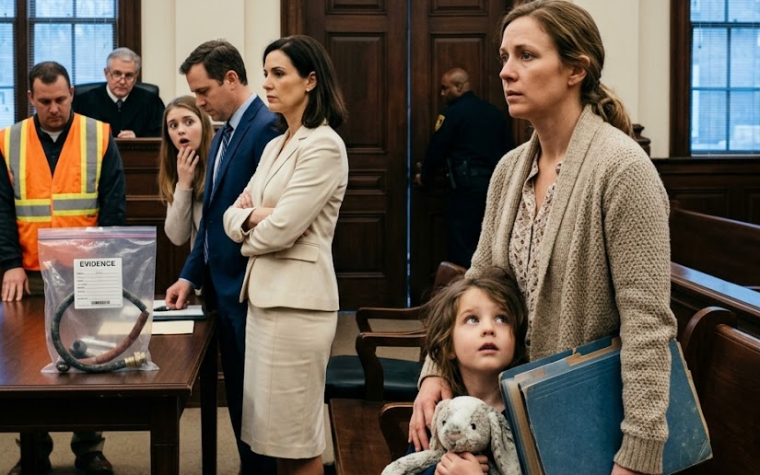
In court, Judge Vance continued reading.
The agreement required the original to remain in bank escrow.
Copies had been given to all three signatories, but the sealed original could be released only after a written dispute, a default, or litigation involving ownership.
That clause was why Evelyn and Brandon had never found it in my home or office.
They had searched both.
I knew because items had been moved, drawers had been opened, and a small fireproof box had disappeared from my closet two days before their complaint was filed.
The box contained old tax returns and nothing else.
I never confronted them.
Instead, when their lawsuit triggered the escrow clause, I requested the original directly from the bank and filed notice that morning.
My mother turned toward me.
“You planned this,” she said.
Her voice was low, but the courtroom heard her.
I looked at her.
“No.
I prepared for it.”
Judge Vance asked the clerk to mark the agreement as an exhibit.
Then he addressed my mother’s attorney.
“Counsel, your complaint states that Ms.
Carter contributed no personal funds to the company and possessed no ownership interest.
Did your clients disclose this agreement to you?”
The attorney glanced at Evelyn, then at Brandon.
“They represented that no executed agreement existed, Your Honor.”