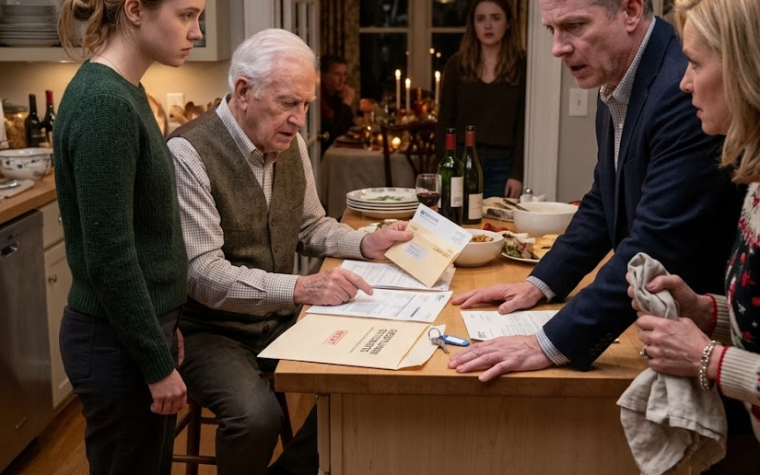
My mother named a medicine, but not the dose.
Without thinking, I answered from across the room.
The adults looked at me.
I felt ashamed, though I had done nothing wrong.
Knowing those details had once been proof that I was useful.
Now they were evidence of how completely I had been used.
The officers and the worker went to our house.
My aunt stayed with me.
For two hours, I paced between the living room and kitchen, convinced that every passing car belonged to someone coming to take me back.
When the worker returned, she brought my schoolbag and several belongings from my room.
She had seen the portable crib positioned beside my bed.
She had found the basket of newborn clothes on my chair.
She had found school forms completed in my handwriting, a calendar of the younger children’s appointments taped above my desk, and a stack of my unfinished assignments beneath a box of diapers.
None of those things alone proved everything.
Together, they told the same story as the notebook.
A temporary safety plan was created that evening.
I would remain with my aunt while the situation was investigated.
My mother would not be permitted to remove me from the house or contact me without another adult involved.
The younger children would receive regular visits and additional support.
Relatives were contacted.
School attendance would be monitored.
My mother would be required to demonstrate that she, not one of her children, was managing the household.
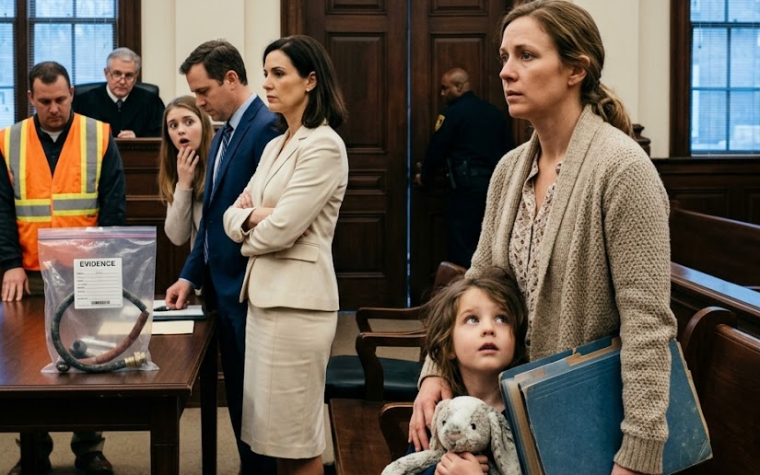
When the worker explained the plan, my mother exploded.
“This is what she wanted,” she said, pointing at me.
“She wanted to punish me.”
I shrank back, but my aunt stood.
“She wanted to sleep,” my aunt said.
“She wanted to go to school.”
My mother laughed bitterly.
“You think you can raise her better?”
“No,” my aunt replied.
“I think she shouldn’t have been raising anyone.”
For the first time that day, my mother had no answer.
She left after sunset.
Before getting into her car, she turned toward the porch.
Her expression was no longer angry.
It was wounded, and that was harder to resist.
“The little ones will ask for you tonight,” she said.
I gripped the doorframe.
“I know.”
She waited for me to follow.
I did not move.
That night, I slept in my aunt’s guest room.
At two in the morning, I woke because I thought I heard a baby crying.
The house was silent.
I walked into the hallway anyway, my heart racing, before I remembered where I was.
My aunt found me standing there.
“You’re allowed to go back to bed,” she said.
I began to cry.
Not because I wanted to return home.
Because some part of me still believed a child would suffer whenever I rested.
The investigation lasted for months.
Nothing changed as quickly or cleanly as I had imagined.
My mother attended meetings, missed others, complained about every requirement, and told relatives that I had turned the family against her.
Some relatives believed her.
They called me ungrateful.