I had asked once whether it contained medication.
When she told me it was private, I had accepted the answer.
That small moment mattered to her more than I understood.
She began testing my character in quiet ways.
Once, she left an envelope of cash visible beneath her chair and asked me to retrieve her shawl.
I picked up the envelope, placed it on her table, and never opened it.
Another time, she deliberately told me an incorrect story about the value of her house.
I did not ask where it was, how much it was worth, or who would inherit it.
She watched me help residents whose families tipped generously and residents who had nothing to offer.
She saw no difference in how I treated them.
Then I reached the line that explained the marriage.
I did want to know what it felt like to call someone my husband, even briefly.
That wish was real.
But I also needed one person the law would recognize immediately when I was gone—someone my nephew could not remove from my bedside, someone entitled to receive my personal belongings, and someone stubborn enough to carry out instructions even while being insulted.
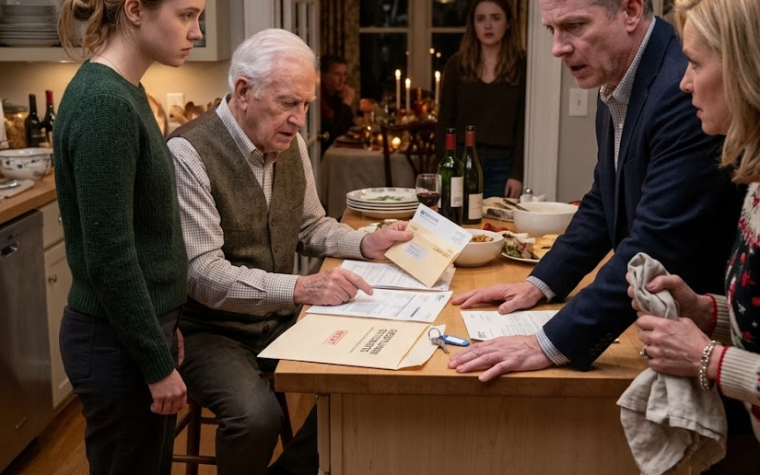
The nephew shook his head.
“She used him.”
I lowered the letter.
For the first time, I spoke directly to him.
“She trusted me.
There’s a difference.”
His jaw tightened.
The lawyer motioned for me to continue.
Gloria wrote that the marriage had not changed the distribution of her estate.
Her trust and will had been completed weeks before she proposed to me.
Medical evaluations, witnessed statements, and video testimony had been collected before the ceremony.
She had taken those precautions because she knew exactly what her nephew would claim.
Manipulation.
Confusion.
Greed.
She wanted the evidence prepared before he could say the words.
The nephew looked toward the exit.
The lawyer closed the door.
“There are still several items to review.”
“You can’t keep me here.”
“No.
But leaving now will not make the documents disappear.”
I reached the final page of Gloria’s letter.
She told me the brass key opened a metal document box in the lawyer’s office.
Inside were the original deed to her house, certified bank records, and correspondence showing that her nephew had attempted to transfer the property to a company he controlled.
The transfer had failed because Gloria’s signature did not match the one on file.
Her nephew had then brought new papers to the nursing home and pressured her to sign them.
That was the conversation she recorded.
Gloria had revoked his power of attorney immediately afterward, but she did not confront him again.
Her lawyer advised her to preserve evidence while the bank traced the missing funds.
By the time the investigation was ready to move forward, Gloria’s health was failing.
She feared that if she died before everything was secured, her nephew would take the bag, destroy the records, and describe her as a confused old woman manipulated by strangers.
So she created a final chain of custody.
The bag would remain with her while she lived.
After her death, it would go directly to her surviving husband.
Her lawyer would witness its opening.
The recordings and ledger would then be delivered to the authorities.
The nephew’s face had gone gray.
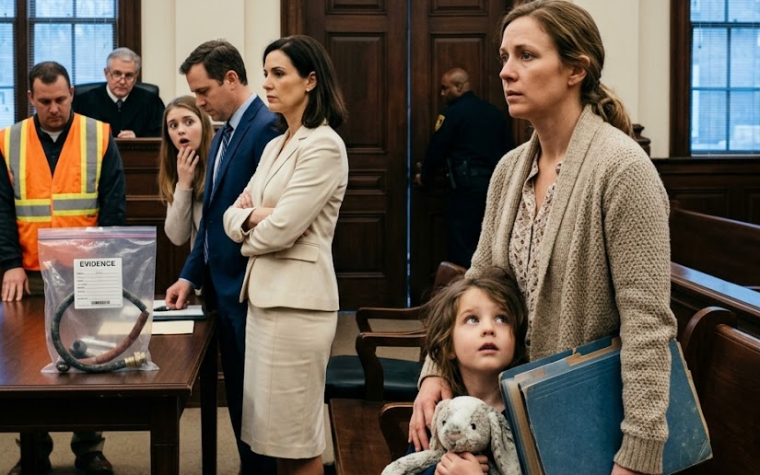
“You set this up,” he said to the lawyer.
“Gloria set it up.”
“She hated me.”
“She waited for you,” I said.