Mom’s written timeline matched the digital access logs almost hour for hour.
The power-of-attorney documents were never valid because Mom had not signed them.
The wire transfer was frozen.
The bank restored her account access and opened its own fraud investigation.
Clara was ordered to stay away from Mom and the house while the case proceeded.
She moved in with a relative and sent me long messages that shifted between apology, blame, and threats.
I saved every one.
In one message, she said Mom had forced her to act.
In another, she admitted she only wanted enough money to start over.
In a third, she warned that no court would believe an elderly woman over a devoted caregiver.
That message became part of the evidence too.
The legal process was not quick or cinematic.
There were interviews, motions, account reviews, medical examinations, and days when Mom had to repeat details she wanted to forget.
But she was no longer repeating them through a locked door.
She sat at tables with an advocate beside her.
She reviewed every document before signing it.
When she became tired, the interviews stopped.
The psychiatric assessment Clara had arranged remained one of the most important records in the case.
It established that Mom understood her finances, recognized the people around her, and could give a consistent account before anyone told her how much evidence had already been found.
Clara eventually accepted responsibility for the attempted financial exploitation and unlawful confinement rather than face a trial built around her own recordings and digital trail.
The court imposed penalties, restitution requirements, and a protective order.
The exact sentence mattered less to Mom than one particular sentence written into the official findings:
Margaret Carter was a competent adult whose liberty and property had been deliberately restricted for financial gain.
Mom requested a copy.
She kept it in the same drawer where she once stored her peach cobbler recipe.
I stayed on emergency family leave long enough to replace the bedroom door, restore the security system, and help Mom separate every account Clara had touched.
We added alerts that required Mom’s direct confirmation.
We met with an attorney and created documents that reflected Mom’s choices rather than stealing them.
The first night after the lock was removed, Mom refused to sleep upstairs.
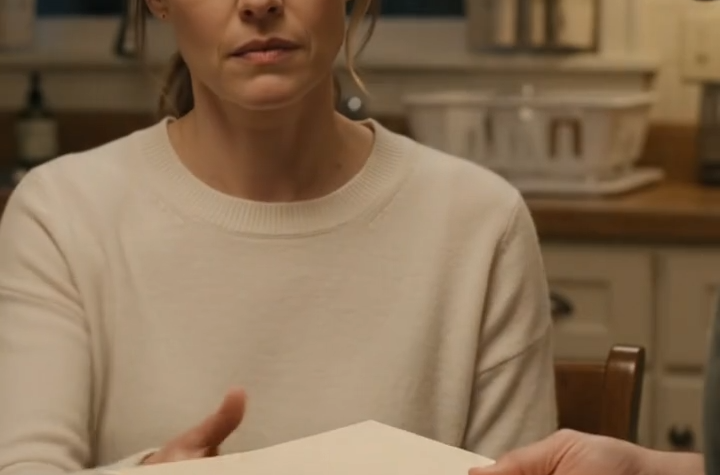
She sat at the kitchen table until dawn with every light on.
I sat across from her.
Neither of us spoke much.
Just before sunrise, she looked toward the hallway and said, “I kept thinking you would come home and believe her.”
“I almost acted too quickly.”
“You did act.”
“I locked the door again.”
Her eyes lowered to her wrists.
The bruises were fading from purple to yellow.
“You had to,” she said.
“I still hear it.”
“So do I.”
There was no clean answer to that.
Protecting her required me to leave her behind that door for one more night while I gathered proof.
It had worked, but success did not erase the sound of the key turning.
Weeks later, Mrs.
Higgins brought over a peach cobbler and stood awkwardly on the porch.
Mom let her inside.
They talked for nearly an hour.
Mrs.
Higgins admitted that several neighbors had heard things they dismissed because Clara seemed so calm and capable.
Mom listened, then told her, “Next time someone is asking for help, do not let another person explain the cry away.”
Mrs.
Higgins nodded.
The story Clara had spread through the neighborhood faded slowly.
Truth rarely travels with the same confidence as a lie.
It had to move through records, statements, and uncomfortable apologies.