I studied her face.
An apology could acknowledge damage.
It could not erase it.
Forgiveness was not a switch that a guilty person deserved to have flipped for them.
“I need more than one honest dinner,” I said.
She nodded, crying openly now.
“I know.”
It was the first useful thing she had said.
Colonel Whitaker approached carrying the gray folder.
He had placed the loose pages in order and secured the clasp.
“This belongs to you.”
I took it from him.
“For years, I hated this thing.”
“And now?”
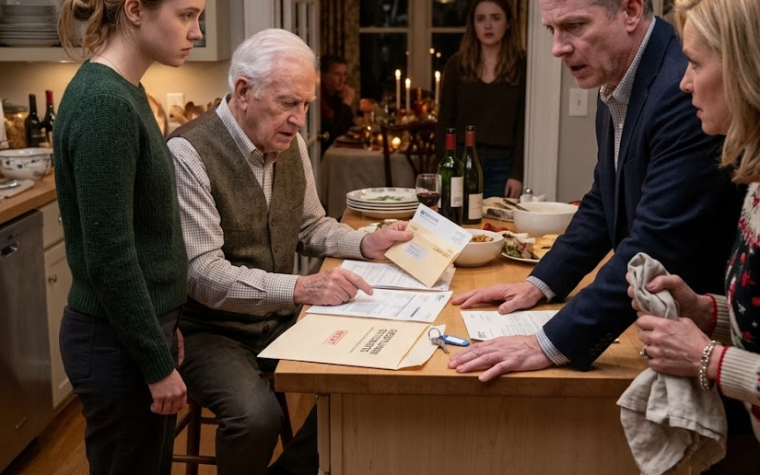
I looked through the open doorway at Ethan and Cassandra standing together, no longer pretending their families were immaculate.
My father remained at the table with his head lowered.
My mother waited without asking me to relieve her guilt.
“Now it is evidence,” I said.
“Nothing more.”
The following week, I hung the Department of Justice commendation on my apartment wall.
Not in the center.
Not beneath a spotlight.
I placed it beside the old photograph of the frightened twenty-two-year-old woman outside the hospital.
For years, I had looked at that photograph and seen someone bruised, isolated, and impossible to defend.
Now I noticed her grip on the folder.
Both hands.
Shoulders squared.
Eyes open.
She had not known whether the truth would save Colonel Whitaker’s career, protect the patients, or survive the people trying to bury it.
She had known only that surrendering it would make the lie permanent.
My family did not transform overnight.
My mother sometimes began sentences with explanations before stopping herself.
My father struggled to speak about the years he had remained silent.
Ethan apologized more than once because one apology could not contain everything he regretted.
I let their changed behavior matter more than their promises.
Months later, at Ethan and Cassandra’s wedding, Colonel Whitaker found me before the ceremony.
He wore his formal uniform, but his voice was quiet.
“I was told your mother gave you no instructions this time.”
“She did not.”
“And if she had?”
I smiled.
“I would have brought the folder.”
He laughed once, then offered me his arm as the guests began moving toward their seats.
I did not enter the room as the difficult daughter, the disgraced clerk, or the woman everyone needed to manage.
I entered as Grace Mercer—the person who had seen a truth being erased and refused to look away.
My dignity had never been restored by the colonel’s recognition, the federal commendation, or my family’s regret.
Those things only revealed what had been true all along.
I had not disgraced my family by speaking.
They had disgraced me by demanding silence.