The colonel accepted it without defensiveness.
“During the investigation, my attorneys were instructed not to communicate with witnesses.
Afterward, I sent a letter through official channels.
It was returned.”
He looked at me.
“I assumed Grace wanted no contact.”
“I never received a letter.”
My father’s head lifted slowly.
My mother went still.
There was another silence, different from the earlier ones.
This one contained recognition.
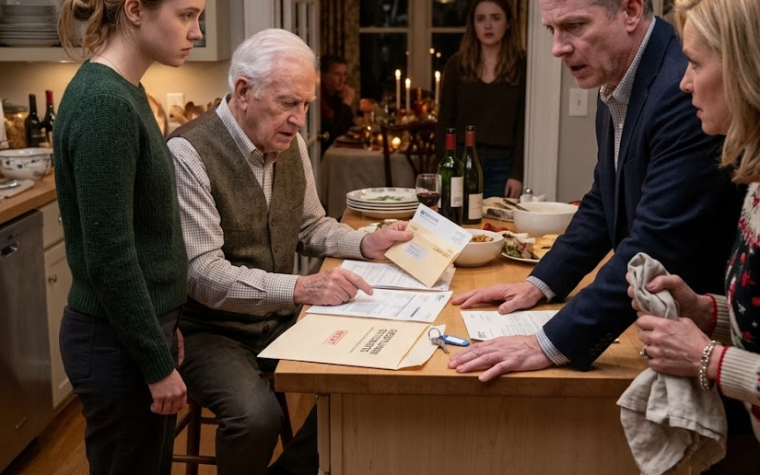
Years ago, official envelopes had arrived at my parents’ house after I moved into a temporary apartment.
My mother had told me they were more legal notices and that she had returned them to protect me from being dragged back into the scandal.
“You returned it,” I said.
She closed her eyes.
“I thought it was another demand.”
“You did not open it?” Colonel Whitaker asked.
“No.”
“You did not call Grace?”
“No.”
That was the sharpest consequence of the evening.
Not a dramatic confession.
Not calculated sabotage.
Something more ordinary and, in its own way, more painful.
My mother had been so certain that my truth was dangerous that she had rejected evidence before knowing what it contained.
Colonel Whitaker rose from the table.
“I owe Grace an apology too.”
I looked up.
“For what?”
“For allowing the official conclusion to become the end of my responsibility.
I was cleared.
My career continued.
I told myself the system had recognized what you did.
I did not ask whether your life had been repaired.”
He stood with the same posture that had intimidated my mother over the phone, but there was no performance in his voice now.
“You protected people you had never met.
You preserved my name when I did not even know yours.
I should have made certain the truth followed you home.”
I closed the folder.
“The truth did follow me home.
No one here wanted to hear it.”
My mother covered her mouth.
Dinner went cold while the family finally asked the questions they should have asked nine years earlier.
Ethan wanted to know where I had lived during the depositions.
Cassandra asked about the patients whose cases had been reopened.
My father asked what happened to the supervisor who had warned me to stop looking.
Colonel Whitaker answered when I grew tired and remained silent when the answer belonged to me.
No one demanded that I soften the facts.
No one asked me to apologize.
Near midnight, my mother followed me into the foyer.
She held my coat but did not try to place it over my shoulders as if I were still a child.
“I called you at two in the morning to tell you to be quiet,” she said.
“Yes.”
“I was afraid you would embarrass Ethan.”
“Yes.”
“And all this time, you were the person in the room who had behaved with honor.”