Anonymous messages called me a liar.
Someone sent local reporters a photograph of me leaving the hospital with the bandage on my head and described me as a disgruntled employee who had attacked a superior.
My mother saw those stories and asked why I kept making things worse.
She never asked who was feeding reporters the lies.
At the Whitakers’ table, she began to cry.
Not loudly.
My mother never lost control in public.
Tears gathered while she kept her shoulders straight.
“I did not know,” she said.
“You knew I was injured,” I replied.
“You knew they wanted my silence.
You knew lawyers were involved.
You chose the explanation that protected your comfort.”
My father rubbed one hand over his face.
“We thought the military would handle its own affairs correctly.”
Colonel Whitaker’s voice hardened.
“Institutions do not correct themselves merely because they wear honorable symbols.
People correct them.
Usually at great cost.”
No one answered.
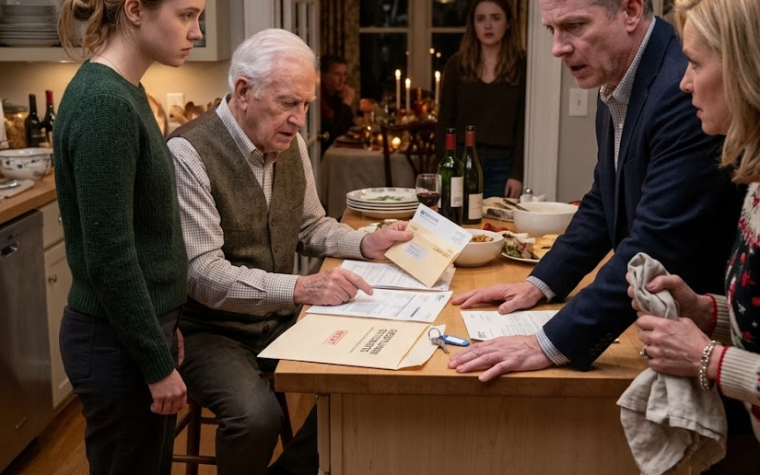
I removed another document from the folder.
It was the letter clearing me of the accusations that I had stolen or fabricated records.
Beneath it lay copies of the civil settlements reached with affected families, each stripped of identifying medical details.
Several administrators had been removed.
Two lost their professional credentials.
One pleaded guilty to falsifying federal records.
The hospital adopted outside complaint monitoring and reopened cases that had been improperly closed.
The lawsuits my mother had treated as evidence of my instability had forced restitution and medical review for families who had been ignored.
The interviews she considered shameful had prevented the hospital from quietly describing the scandal as a paperwork error.
The Department of Justice commendation did not transform me into a hero.
It did not restore the jobs I had lost, erase the stories printed about me, or return the years I spent doubting my own memory.
It simply stated, in formal language, that my documentation and cooperation had materially assisted a federal civil rights investigation.
Colonel Whitaker tapped the page lightly.
“This commendation understates what she did.”
My mother looked at me.
“Why is it still leaning against your wall?”
The question surprised me.
“Because hanging it felt like asking permission to believe it.”
Cassandra left the table and returned carrying a small frame from the sitting room.
She removed the family photograph inside and set the empty frame beside my certificate.
“You should not need permission,” she said.
It was a simple gesture, but Ethan’s face crumpled.
He stood and came around the table.
“I made you promise not to ruin tonight.”
“Yes.”
“I thought I was protecting Cassandra from you.”
“I know.”
He swallowed.
“I should have protected you from us.”
I did not tell him everything was fine.
It was not.
I also did not push him away when he placed a hand on my shoulder.
My mother watched us, then turned toward Colonel Whitaker.
“Why did you never contact her?” she asked.
“If she saved your career, why did she carry this alone?”
It was the first difficult question she had asked someone other than me.