I started staying after my shift, comparing archived scans with final files.
I wrote dates by hand because entries in the digital audit log had been deleted.
I printed copies because I had watched documents disappear from the server overnight.
Within two weeks, I had thirty-one cases.
Most involved wounded enlisted personnel with expensive rehabilitation needs.
If they were separated under the altered evaluations, many would lose access to treatment and face years of appeals before receiving full benefits.
The officer overseeing the administrative process was Major Adrian Rusk, Colonel Whitaker’s deputy hospital administrator.
Rusk was polished, patient, and admired by people who never had to say no to him.
He spoke about efficiency as if it were a moral virtue.
He knew which commanders wanted better numbers and which employees were afraid of being labeled difficult.
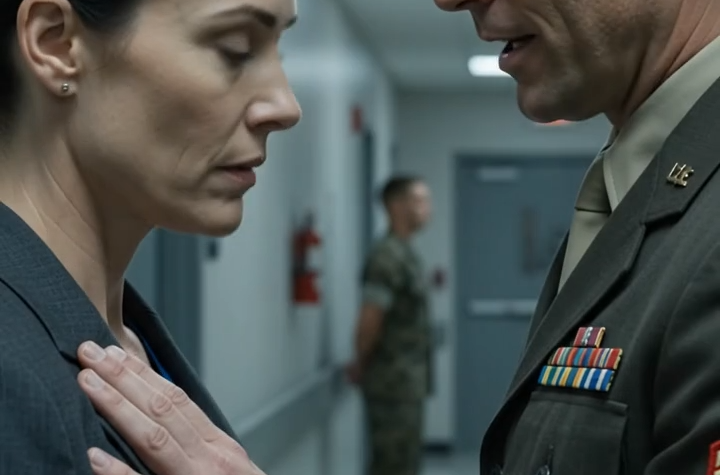
One afternoon, he appeared beside my desk and placed a hand on the folder I was reviewing.
“You’ve been opening files outside your assigned queue,” he said.
“I’ve been correcting routing errors.”
“That isn’t your responsibility.”
“Someone changed the evaluations.”
His smile did not move.
“You’re young, Ms.
Mercer.
Young people often mistake incomplete information for wrongdoing.”
“Then complete it for me.”
The smile disappeared.
He told me to surrender my notes.
I refused.
The next morning, my system access was restricted.
By lunch, security had been told I was copying confidential information.
My supervisor would not meet my eyes.
I called my mother from the parking lot.
I had forgotten that part until I sat at the Whitakers’ table and watched her turn pale.
“What did you tell me?” I asked.
Mom’s fingers tightened around her napkin.
“I don’t remember every conversation from seven years ago.”
“I said I thought military medical records were being altered.”
She looked toward Ethan, as if he might rescue her from the memory.
“And you told me not to accuse important people unless I wanted to destroy my future.”
“I was scared for you.”
“You told me to apologize.”
My father stared at his plate.
Colonel Whitaker’s expression hardened, but I continued before he could speak.
I had not apologized.
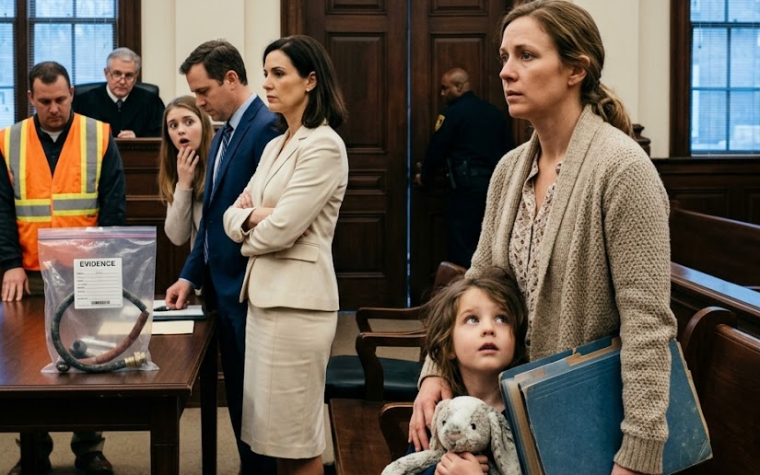
Instead, I copied the audit dates, patient complaints, and conflicting evaluations into a black folder.
I included a schedule showing that several approvals bearing Colonel Whitaker’s initials had been entered while he was overseas at a medical-command conference.
Page seventeen contained the clearest example.
A discharge authorization had supposedly been approved by Colonel Whitaker at 10:42 on a Tuesday morning.
At that exact time, he had been delivering a recorded address in Germany.
The signature could not be his.
Neither could the twenty authorizations linked to the same access terminal.
I planned to take the folder directly to the inspector general’s regional office.
Rusk learned about it before I could leave.
He found me in the concrete stairwell near the employee parking level.
He locked the door above us and told me I had stolen protected medical information.
He said I could surrender the folder and resign quietly, or he would make sure I was prosecuted.
I told him a prosecutor might be interested in page seventeen.
That was when he grabbed my arm.
He pulled for the folder.
I held on.
My heel slipped on the edge of a step, and the side of my head struck the concrete wall.