“I didn’t know Dad was going to do that.”
“Neither did I.”
“Mom says you planned all of this.”
That made me open my eyes.
“Planned what?”
“She said that’s what your message meant.
That you went there trying to get Dad arrested.”
For one second I couldn’t answer.
Then I laughed once, without humor.
“I planned for what I would do if somebody crossed a line.
I did not plan for Dad to throw a glass at my head.”
Bethany was quiet.
“Kenneth told the police what happened,” she said.
That surprised me.
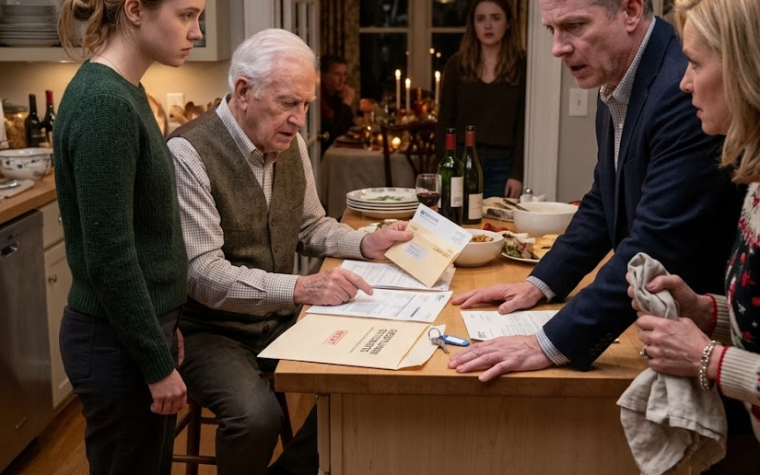
At Easter dinner, Kenneth had spent most of the argument staring at his mashed potatoes.
“What did he tell them?”
“The truth.”
I sat down at my kitchen table.
Bethany continued.
“Dad told them the glass slipped.
Kenneth said it didn’t.
He said Dad picked it up and threw it after you said the rooms were yours.”
There it was.
The first crack in the version my parents were already trying to build.
“And you?”
Another pause.
“I told them the same thing.”
I hadn’t expected that either.
“Madison saw it,” Bethany whispered.
“She kept asking why Grandpa hurt you.
I couldn’t lie in front of her.”
My anger toward Bethany did not disappear.
She had participated in the pressure.
She had allowed my parents to speak about my home as though my ownership were selfishness.
She had let “temporary” become an expectation.
But she had not thrown the glass.
And when she finally had to choose between protecting our parents’ story and telling the truth, she had told the truth.
“You still can’t move in,” I said.
“I know.”
I waited for the argument.
It never came.
“Kenneth and I will figure something else out.”
Those words should have been ordinary.
Instead, they felt revolutionary.
For weeks, everyone had spoken as though the only possible solution to Bethany’s problem was surrendering my house.
Suddenly, another solution existed simply because I had stopped being available as the sacrifice.
Later that day, my lawyer called after reviewing the messages and my ER paperwork.
He reminded me of something important: whatever happened with my father from that point forward was not something my mother could order me to erase.
Police and prosecutors would make their own decisions based on the evidence and local law.
My job was simpler.
Tell the truth.
Preserve the evidence.
Protect my home.
Do not negotiate under intimidation.
That evening, Harold finally sent me a message.
It contained no apology.