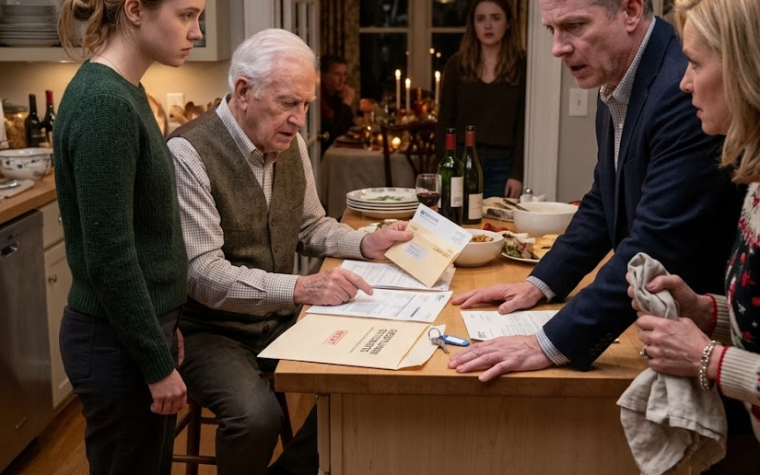
So I stood beside him.
We listened to the water gathering heat.
Neither of us spoke.
When the kettle clicked off, he laughed once through his tears.
“He made terrible tea,” he said.
I laughed too.
Dad did make terrible tea.
He always left the bag in too long, then added too much milk and insisted everyone else was doing it wrong.
That stupid detail opened the door to ten others.
The time he burned toast and scraped it over the sink.
The mug he refused to throw away despite the crack in the handle.
The way he pretended not to like visitors and then kept them talking at the door for forty minutes.
My brother took two cups from the cupboard.
“Milk?”
“A little.”
He poured.
Then he finally picked up the sandwich that had been sitting beside him.
He ate half without seeming to notice.
The next morning, the house filled again.
There was more bread than we could possibly finish.
More milk appeared before we ran out.
Someone returned with clean linen.
Someone collected used dishes and brought them back washed.
The practical care continued so smoothly that I began to understand its quiet genius.
People often fear entering a grieving house because they do not know what to say.
Food gives them a reason to cross the threshold.
They can say, “I brought this.”
Then they are inside.
Once inside, they can pour tea.
They can carry a chair.
They can sit beside someone who should not be alone.
The gift is not really the sandwich.
The sandwich is permission to stay.
By the day of the burial, my brother had stopped objecting to the visitors.
He had become the one checking whether the kettle was full.
When an elderly neighbor came through the door looking uncertain, he pulled out a chair before she asked.
When one of Dad’s friends stood silently in the hall, unable to speak, my brother handed him a cup and stood beside him.
No speech.
No explanation.
Just tea.
After the funeral, the house eventually emptied.
That was harder than I expected.
For days I had thought I wanted quiet.
Then quiet arrived and felt enormous.
Borrowed dishes sat stacked near the sink waiting to go home.
Folded chairs leaned against the wall.
Dad’s coat still hung by the door.
My brother came into the kitchen carrying two cups.
He looked around.
“Feels empty.”
I nodded.
He filled the kettle.
Neither of us mentioned the argument from the first day.
We didn’t need to.
He switched it on and leaned against the counter.
A few minutes later there was a knock.