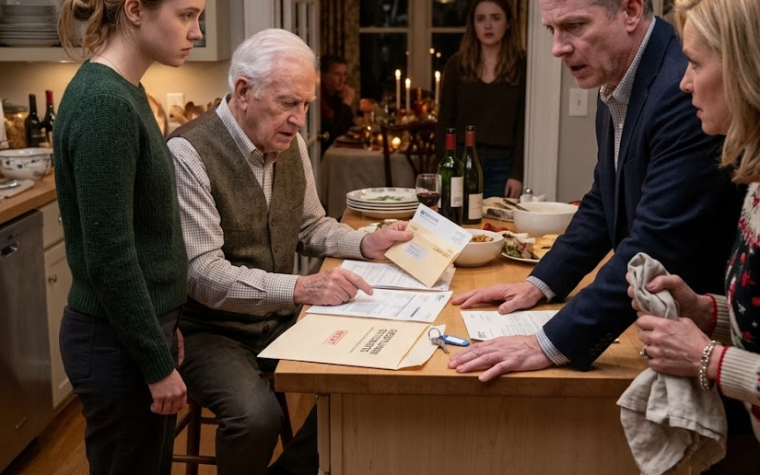
That was the part people misunderstand about feeding mourners.
Hunger does not follow grief politely.
Shock can erase appetite.
Exhaustion can make a person feel sick at the thought of food.
Time loses its shape.
Morning, afternoon, and evening stop meaning what they meant the day before.
But the body keeps asking for care even when the mind has gone somewhere unreachable.
Tea is warm.
Bread is solid.
A sandwich can be placed in someone’s hand.
A cup can remind them to swallow.
Those things sound small until everything else has become too large.
Dad’s body remained in the house for the vigil, and people continued coming.
Some stayed five minutes.
Some stayed an hour.
Some seemed to understand, without being told, that one of us needed company and another needed silence.
Nobody demanded that we perform grief correctly.
That surprised me most.
My brother had accused me of hiding in the kitchen because I kept making tea.
Maybe he thought grief was supposed to look a certain way.
Crying immediately.
Sitting still.
Speaking softly about the person who had died.
But grief was not one emotion moving in one direction.
It was physical.
It made my aunt forget where she had put her glasses even though they were on her head.
It made my cousin wash the same teaspoon three times.
It made my brother angry at kettles.
And it made me desperate for tasks with beginnings and endings.
Fill.
Boil.
Pour.
Carry.
Return.
Repeat.
The older traditions of the Irish wake understood that long before anyone used clinical words for shock or nervous-system regulation.
For centuries, death was not removed immediately from the home.
The family and community remained near the body, keeping vigil.
The custom reached back toward pre-Christian beliefs that the soul lingered near the dead for a time, even as later generations folded the wake into Christian practice and family custom.
But beliefs can change while gestures survive.
The body could be taken elsewhere.
Funeral arrangements could become more formal.
Families could cross oceans and settle in America, England, Australia, or anywhere else.
Still, when death came, somebody reached for the kettle.
Somebody brought food.
Somebody found chairs.
That evening, I understood why.
A young mother arrived carrying a dish in one hand and holding a sleepy child with the other.
She apologized for bringing the child.
My aunt shook her head.
“Don’t apologize.”
Within minutes another relative was minding the little one while the mother stood beside Dad’s coffin and cried.
That was how the work moved around the room.
Nobody announced assignments.
One person washed cups.
One cut bread.