Nathan ignored her.
“You think this protects Caleb? When this is over, everyone will know what he is.”
I looked past him at my son.
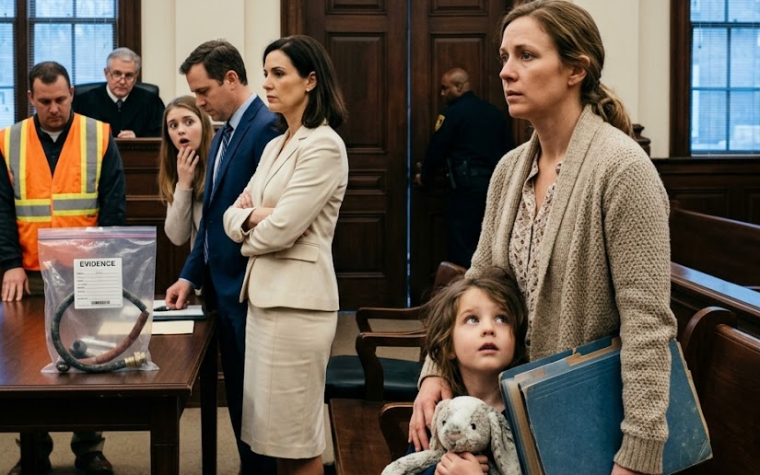
Caleb was sitting on a wooden bench, counting the floor tiles while a court officer kept watch nearby.
“What he is,” I said, “is the reason you made it this far without destroying us.”
Nathan’s mouth tightened.
Vanessa approached from the other end of the corridor.
Her heels struck the floor in quick, uneven beats.
“Nathan, tell me those accounts are clean.”
He turned on her.
“Not here.”
“You said the transfers were approved.”
“Lower your voice.”
“You said Olivia had already signed.”
My attorney heard every word.
So did the court officer.
Vanessa realized it a moment too late.
She stepped back from Nathan as though distance could separate her from the sentence she had just spoken.
The hearing resumed that afternoon.
Nathan’s lawyers attempted to narrow the issue to a typographical mistake.
They argued that the handwritten figures could have been added by an assistant.
They suggested Caleb had confused dates or copied random sequences without context.
The judge asked one question.
“Who had custody of the original documents before they were filed?”
Nathan’s lead lawyer hesitated.
Nathan answered for him.
“My office.”
“And who delivered the final packet to counsel?”
Another pause.
“I did.”
The judge ordered a forensic examination and appointed an independent specialist to oversee the preservation of relevant records.
She also delayed any transfer of the Lake Tahoe property, the settlement accounts, and the trust Nathan had offered me.
The divorce would continue.
Nathan’s control of the evidence would not.
Over the next several weeks, the mistake on page twelve opened a door Nathan had spent years welding shut.
The forensic team recovered earlier versions of the settlement schedules.
In the first version, Contract 414 appeared beside a legitimate infrastructure reserve.
In the final version, the four had become a seven, redirecting the reference to an inactive project account.
That inactive account led to a private entity created months earlier.
Vanessa was one of its beneficiaries.
Two million dollars had already been transferred to it.
The remaining planned transfers were much larger.
The number Caleb had written beside Vanessa’s name was not the amount she had taken from the kitchen plate.
It was an account suffix he had heard her repeat from Nathan’s office.
But when investigators compared the sequence to the bank records, they found the first missing payment.
Two million dollars.
Nathan had offered me $250 million on paper.
Only $248 million was fully funded when he placed the folder on the counter.
Vanessa had already taken two.
The coincidence would have sounded ridiculous if the records had not confirmed it.
Caleb had counted the grapes because counting made the world orderly.
Nathan had mocked him for it while using a settlement with the same missing quantity.
The investigation moved beyond the divorce documents.
Whitaker Global’s board formed a special committee.
Independent auditors reopened several reserve transfers that carried my signature or consent mark.
Some signatures were genuine.