My parents had obligations tied to maintaining it and preserving the estate plan they had built around it.
They were looking for liquidity and had hoped I might provide it without forcing them to sell outside the family.
“A loan?” I asked.
“Possibly.”
“A gift?”
He hesitated.
“Your parents haven’t used that word.”
Of course they hadn’t.
“And what does Luke contribute?”
Silence.
That answer was clearer than any sentence could have been.
I thanked him and hung up.
Then I called Nina.
She had already reviewed the public information she could access and told me the first thing I needed to hear.
“Don’t do anything emotional.”
I almost laughed.
“That’s the family specialty.”
“Then don’t compete with them.
If you’re interested in preserving the property, we treat it like a transaction.
Independent valuation.
Your own attorney.
Clean terms.
No handshake promises.”
“Can I buy it?”
“If the owners are willing to sell it.”
I stared at the old deck.
“They want me to save it.”
“Saving something and owning it are not the same thing,” Nina said.
“Decide which one you’re willing to pay for.”
That sentence stayed with me.
My parents had spent years teaching me, accidentally, that support always came with ownership.
Luke received money, cars, introductions, second chances, and the confidence of knowing someone would catch him.
I received conditions.
Proof first.
Results first.
Survival first.
Now they wanted me to provide the one thing they had never given me: unconditional financial rescue.
I wasn’t interested in revenge.
But I was finished pretending that boundaries were cruelty simply because my family preferred me without them.
I asked my attorney to prepare two things.
The first was a short written confirmation of Synkly’s ownership and governance structure.
The second was a proposal for the family property.
Not a gift.
Not an undocumented loan.
A purchase proposal at a value supported by an independent appraisal, structured through a separate holding company so Synkly itself would never be dragged into family business.
My parents could preserve the house from an outside sale if they accepted.
They would receive the liquidity they said they needed.
They could remain there for a defined transition period under written terms.
But ownership would transfer.
To me.
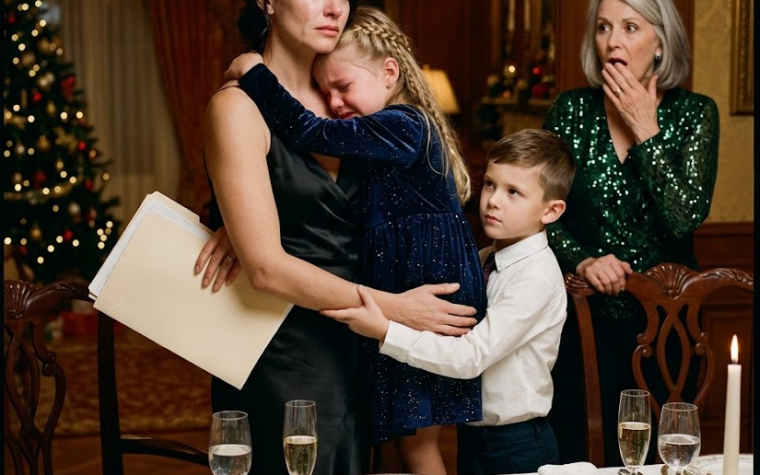
Four days later, we met again at the dining table.
Same polished wood.
Same wine glasses, though nobody poured wine.
This time I brought my own folder.
Luke was already there.
He had cleaned himself up.