Along the curb, the convoy waited with engines idling low.
Personnel moved with quiet efficiency around the vehicles.
A few porch lights had come on in neighboring houses, but nobody approached.
I walked down the driveway.
At the lead vehicle, the escort paused.
The senior officer placed my suitcase inside and turned back toward me.
“Ready, Colonel?”
I looked over my shoulder once.
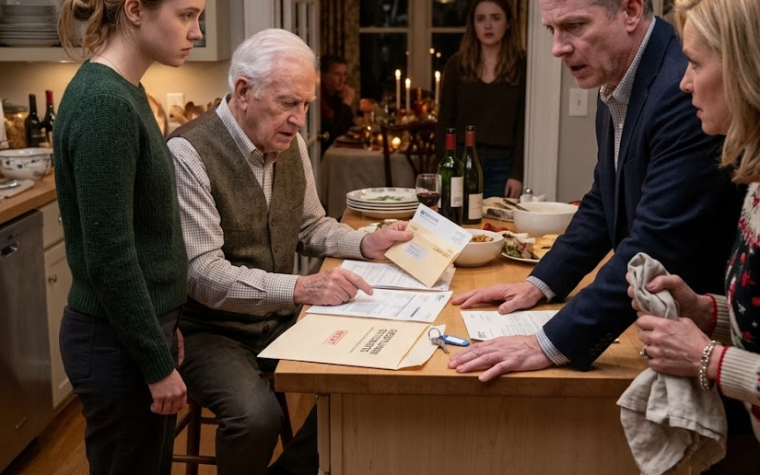
David’s family stood framed in the doorway.
Harper looked stunned.
Julian looked smaller without his grin.
My mother-in-law held one hand against her chest.
My father-in-law stood beside her, his newspaper still abandoned on the kitchen table behind him.
Seven months of grief lived in that doorway with them.
So did years of assumptions.
I didn’t salute them.
I didn’t lecture them.
I didn’t tell them they would regret underestimating me.
I simply nodded once.
Then I got into the vehicle.
As the convoy pulled away, I rested my palm against my stomach.
The baby moved.
A small, unmistakable kick.
For the first time that morning, I smiled without forcing it.
The secure residence would not replace the home David and I had imagined.
No military escort could make his side of the bed less empty.
Rank could command soldiers, authorize operations, and carry responsibilities most people would never see, but it could not order grief to disappear.
I knew that.
What changed that Thanksgiving was something quieter.
I stopped allowing other people to confuse my restraint with dependence.
David’s family had expected a helpless widow to carry her boxes into a freezing garage while Julian took her bedroom.
Instead, they watched the woman they had dismissed walk toward a convoy that had been sent for her.
Not because she was David Parker’s widow.
Not because she needed rescuing.
Because she had spent years building a life of service, responsibility, and authority they had never bothered to imagine.
And as the house disappeared behind us, I realized I didn’t need them to be impressed by Colonel Evelyn Parker.
I only needed them to remember that Evelyn had deserved basic dignity long before they learned the rank.