I had tried to protect his son even then.
“He’s under pressure.”
Charles had almost smiled.
“So are you.”
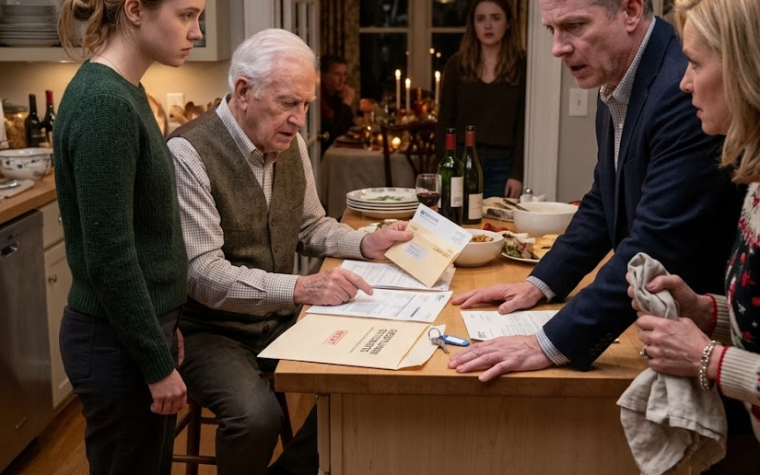
That was the night he gave me the envelope.
Monday morning, we met at the attorney’s office.
Graham arrived with Eleanor.
Savannah was not invited.
For the first time in years, Graham sat across from me without assuming I was on his side.
Charles’s attorney reviewed the documents methodically.
The family jet and its holding company were under my control.
Several other family assets remained in trusts with conditions Graham had not expected.
Charles had not disinherited his son, nor had he handed me everything.
He had done something more deliberate.
He had removed Graham’s ability to act as though inheritance meant absolute power.
Major family assets required oversight.
Certain decisions required trustee approval.
The structure prevented Graham from casually selling, pledging, or using property that Charles intended to remain protected.
Eleanor called it an insult.
The attorney called it Charles’s estate plan.
Graham called it manipulation.
I called it a boundary.
Then came the part that broke whatever performance remained between us.
The attorney produced a written memorandum from Charles explaining why he had made the changes.
He knew about Savannah.
He knew Graham had been using family resources while deceiving me.
He knew Eleanor had encouraged me to remain silent for the sake of appearances.
And he wrote one sentence that emptied the room of sound:
Claire showed me loyalty when loyalty cost her something.
My son has confused loyalty with obedience.
Graham stood so abruptly his chair struck the wall.
“You poisoned him against me.”
I remained seated.
“I defended you to him.”
That was true, and perhaps that was why Graham could not answer.
Charles had reached his conclusions despite my attempts to soften them.
Eleanor demanded litigation.
The attorney calmly reminded her that Charles’s capacity had been documented, his signatures witnessed, and the restructuring completed before his final medical decline.
They were free to challenge it.
But they would be challenging evidence, not rumor.
Graham looked at me differently then.
Not lovingly.
Not apologetically.
Carefully.
He finally understood that the woman he had ordered off the jet stairs was not standing outside the family with an empty suitcase.
I had legal standing he had not bothered to investigate, documents he had not known existed, and the confidence of the father whose legacy he had assumed was automatically his to command.
Our marriage did not magically repair itself.
I did not want it to.
In the weeks that followed, Graham moved out of the townhouse.
Lawyers handled the separation.
Savannah disappeared from family events almost immediately after discovering that Graham’s inheritance came with restrictions rather than a blank check.
Whether she left because of money, humiliation, or simply because the fantasy had changed was no longer my concern.
Eleanor never apologized.
She did, however, stop telling me how a Whitmore woman should behave.
Captain Keller remained with the aviation company.
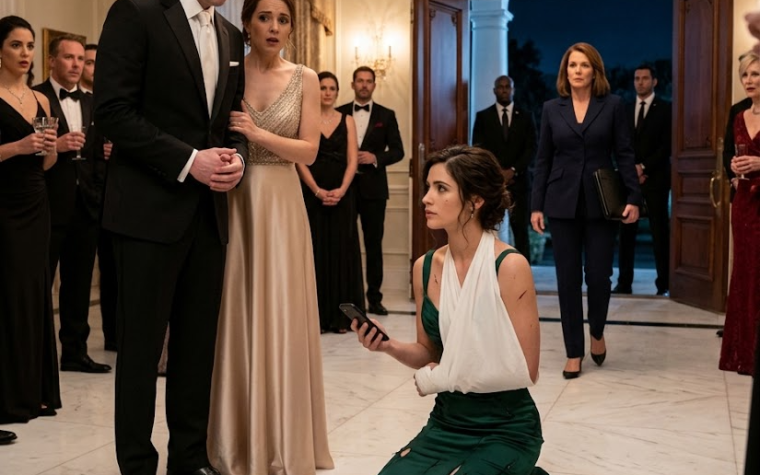
The first time I flew again, I paused at the bottom of the same stairs where they had tried to erase me.