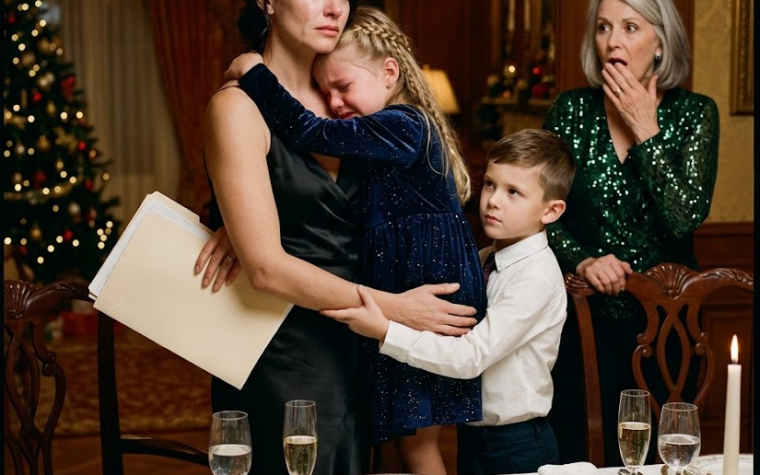
My father spoke too quickly.
“That’s being taken out of context.”
Lance handed him the page.
“The context is above and below it.”
My mother closed her eyes.
My father read, then dropped the paper onto the table.
“Fine.
Yes.
We thought reconciliation would be good for everyone.
Is that a crime?”
“No,” I said.
“Just finally accurate.”
He looked at me with the same expression he had worn when I was seventeen and standing beside that suitcase—as though my refusal to cooperate with his version of events were a personal offense.
“You have poisoned him against us.”
Sigard’s expression changed instantly.
Not dramatically.
Just enough.
“Don’t do that.”
My father turned toward him.
“Do what?”
“Make her responsible for your choices.”
My father opened his mouth, but Sigard kept speaking.
“She didn’t call you when the article came out.
You called her.
She didn’t bring you here.
You came.
She didn’t write those emails.
You did.
And she didn’t sign that document twenty years ago.”
He pointed to the old guardianship papers.
“You did.”
My mother sat down.
The performance was gone now.
Without the straight posture and measured smile, she suddenly looked older.
“I was afraid,” she said.
I looked at her.
For the first time that afternoon, the sentence sounded less rehearsed.
“Of what?”
She stared at her hands.
“Of admitting we were wrong after we had told everyone we weren’t.”
My father turned sharply.
“That’s enough.”
She ignored him.
“At first, we thought you’d come back apologizing.
Then Elena became involved.
Then there were papers.
People asked questions.
Your father said if we brought you home after everything we’d said, it would make us look weak.”
My chest tightened.
Not because the truth surprised me.
Because hearing it spoken aloud after twenty years felt different from knowing it privately.
My father stared at her.
“You are simplifying a complicated situation.”
“No,” she said quietly.
“We complicated a simple one.
She was seventeen.”