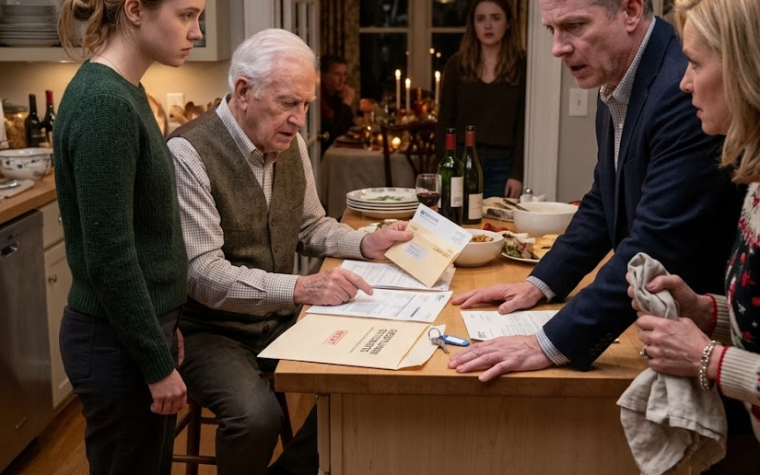
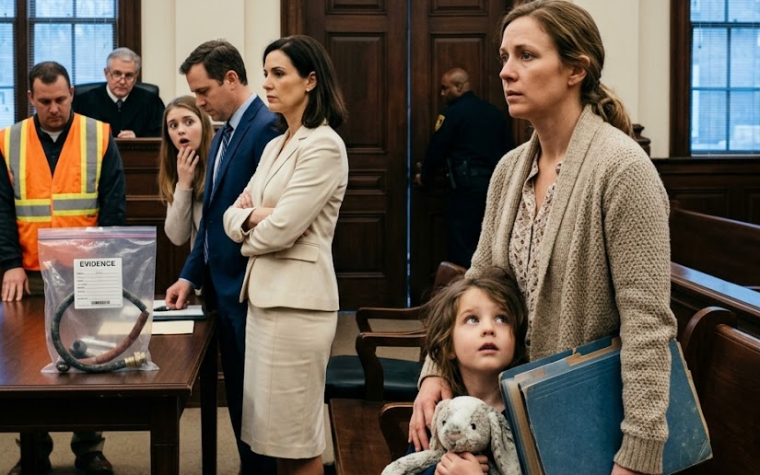
They had convinced Mom that opening an envelope would get us killed.
They had convinced me that returning home would endanger Owen.
Each of us had carried one piece of the truth while believing we were alone.
By midnight, investigators had executed an emergency preservation order preventing Silver Creek from destroying records.
The next morning, state officials closed the plant’s remaining high-risk processing units and began testing the soil, groundwater, and homes nearest the creek.
The company issued a statement accusing former employees and unidentified outsiders of manipulating old data.
That statement collapsed within days.
Daniel’s recording matched archived alarm times.
Dad’s voice matched personnel logs showing he had been on duty.
The emergency basin contained chemical residues identical to compounds listed in the hidden discharge reports.
The supervisor’s access records placed him inside the processing unit during the confrontation.
Then other witnesses began speaking.
A retired nurse produced records showing unusual respiratory illnesses among children living near the creek.
Former workers described nighttime releases and orders to disable monitors.
Families brought photographs of dead gardens, stained wells, and relatives who had become sick after years at the plant.
At a packed town meeting, Dad walked to the front carrying the maintenance report he had signed.
People who had known him all his life watched in silence.
“I lied on this form,” he said.
“I signed it because they threatened my family.
That does not excuse what I did.
My silence helped them keep hurting this town.”
He placed Daniel’s photograph beside the report.
“But the failure listed here never happened.
Daniel Cole and I opened the emergency scrubber.
He stayed behind to record the people who ordered the discharge.
He saved Albany, and the company erased him.”
Dad’s testimony triggered more subpoenas, searches, and financial audits.
The supervisor was charged in connection with evidence tampering and obstruction while investigators reopened the circumstances of Daniel’s death.
Several former executives were later indicted on environmental, fraud, and conspiracy charges.
The legal cases moved slowly, but the physical work began immediately.
Silver Creek was ordered to fund emergency water deliveries, medical screenings, and the first phase of cleanup.
A court-appointed administrator took control of money the company had attempted to move out of state.
Workers from the closed units received temporary income protection and retraining assistance instead of being abandoned without warning.
For the first time in years, crews entered the creek wearing protective equipment—not to hide a release, but to remove contaminated soil.
The town was not healed overnight.
Some stores never reopened.
Some illnesses could not be reversed.
Families who had lost loved ones did not receive simple endings.
But Albany stopped pretending.
That mattered.
A week after the town meeting, Owen sat with Dad on the back porch while Mom cut Daniel’s photograph from its damaged cardboard backing and placed it in a clean frame.
Owen asked Dad what his father had been like.
Dad took a long time to answer.
“He was stubborn,” he finally said.
“He believed every machine had a safe way to shut down and every lie had a weak point.
He also talked about your mother whenever he thought nobody noticed.”
Owen smiled faintly.
“Was he scared?”
“Yes,” Dad said.
“Being brave didn’t mean he wasn’t scared.
It meant he knew what fear was asking him to do, and he chose differently.”
Later that evening, I found Dad standing near the front door—the same door he had closed in my face ten years earlier.
“I thought making you hate me would keep you from coming back,” he said.
“It worked for a long time.”
He nodded, accepting the blow.
“I should have trusted you with the truth.”