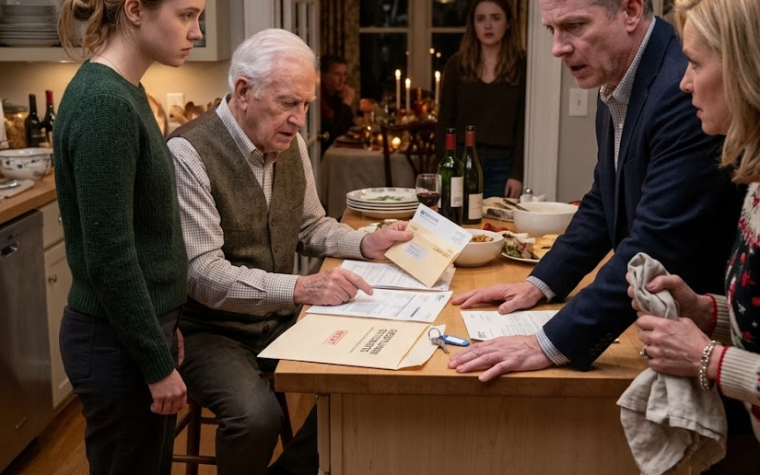
“I’m not leaving you.”
Daniel answered, “Your daughter is carrying my child.
Go protect them.”
Owen’s fingers closed around mine.
On the recording, Daniel ordered Dad through an emergency hatch moments before security entered the processing room.
Then came the supervisor’s voice.
“Where is the master file?”
Daniel refused to answer.
There was a struggle, a burst of static, and the recording stopped.
The supervisor pushed hard against the front door.
Dad braced his shoulder against it.
“You told me he died in the rupture,” Dad said.
The supervisor’s face changed again.
“He caused the rupture.”
“No,” I said.
“Your executives caused it.
Daniel contained it.”
The second man whispered something urgently, but the supervisor ignored him.
“Hand over the drive.”
He shoved the door once more.
The chain strained against its mount.
Owen snatched the yellow folder from the table and stepped backward.
The supervisor reached through the opening.
Dad slammed the door shut and threw every bolt.
For several seconds, no one moved.
Then sirens approached from the end of the street.
The supervisor and his companion hurried toward the SUV, but two unmarked state vehicles blocked it before it could pull away.
Investigators ordered both men to remain where they were.
Dad turned to me.
“You planned this.”
“I planned for them to follow me.”
During my years in Chicago, accounting had taught me that powerful people rarely confessed in words.
They confessed in patterns.
The USB contained more than Daniel’s recording.
It held internal emissions logs, maintenance schedules, employee health reports, and payments routed through shell companies.
At first the documents had looked like disconnected numbers.
After years of study, I saw what Daniel had seen.
Every major release was followed by payments to local officials, private medical settlements, or altered equipment invoices.
Safety funds were transferred out days before inspections.
Workers who reported illnesses received sudden severance payments accompanied by confidentiality agreements.
The poisoning of Albany had not been an accident.
It was a business strategy.
The state investigators entered through the back door after I confirmed their identities.
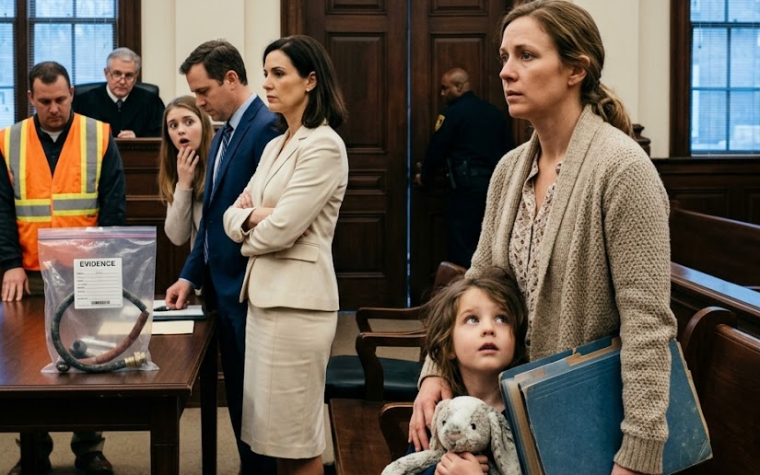
They copied the recording, photographed Daniel’s note, and sealed the original USB in an evidence bag.
One investigator examined the plant badge from Mom’s envelope.
A dark mark crossed its broken edge.
“This badge was used to access the executive archive the night of the discharge,” she said.
“The company claimed it was destroyed.”
Mom lowered herself into a chair.
“I hid it in my apron lining every day,” she said.
“I thought if I moved it, they would somehow know.”
Dad looked at her with grief rather than anger.
“We were living in the same house,” he said, “and they kept us terrified of telling each other the truth.”
I understood then that Silver Creek’s greatest weapon had never been its money or security teams.
It was isolation.
They had convinced Dad that silence protected us.