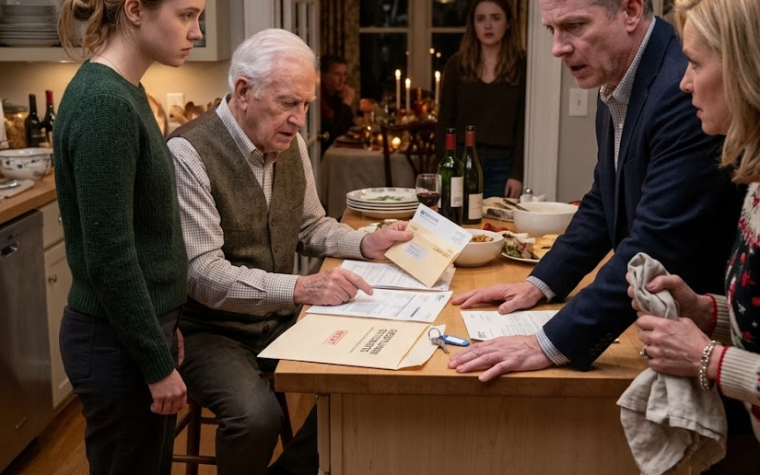
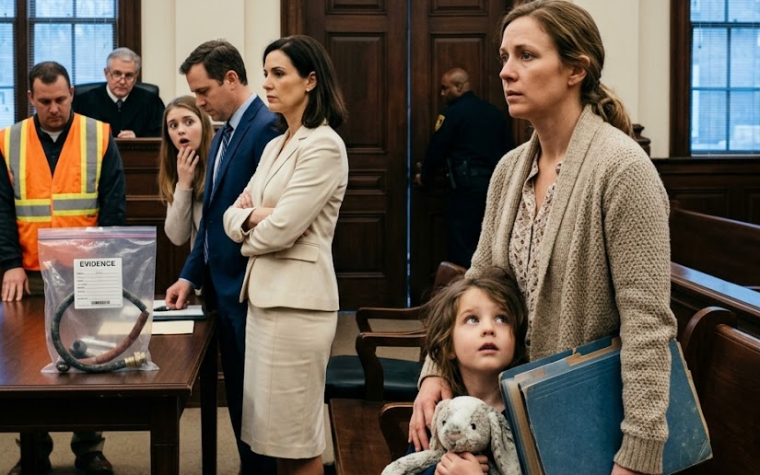
Kara had not attacked strangers.
She had used the instinct our parents had spent their lives teaching us—that family opens the door, listens, forgives, and offers one more chance.
My mother asked whether Kara had intended to kill them.
No one knew how to answer without making the room colder.
The prosecutor later said intention would be argued from the amount of the substance, the staged pill organizer, the lie about leaving town, and the fact that Kara had walked away without calling for help.
The financial motive was documented in pages of bank records.
The poisoning was supported by the mugs, the flask, the medical findings, the camera footage, and Kara’s own recorded statements.
Faced with the evidence, Kara eventually stopped claiming she had never been there.
She said she only wanted our parents unconscious long enough to delay them from reporting the loan.
She said she had misjudged the amount.
She said panic made her leave.
My father listened to that explanation from his hospital bed and shook his head.
“Panic calls an ambulance,” he said.
“She called Emily the next day.”
The criminal case lasted months.
Kara ultimately accepted responsibility for the poisoning and the financial fraud rather than take the evidence before a jury.
She received a substantial prison sentence, and the court ordered restitution for the money taken from our parents.
The bank removed the fraudulent debt from their property after its investigation.
Their home was no longer at risk, though repairing their credit and accounts took time.
The physical recovery took time too.
My mother tired easily for months.
My father needed therapy to regain his balance and strength.
Neither of them drank tea for a long while.
I visited every evening after work.
At first, I treated those visits as punishment.
I brought groceries, organized medications, cleaned rooms that were already clean, and apologized for every weekend I had missed before the poisoning.
One night, my mother stopped me as I wiped the kitchen counter for the third time.
“Emily, sit down.”
“I just need to finish this.”
“No.
You need to stop trying to rewrite Tuesday.”
I stood with the cloth in my hand.
She pointed to the chair beside her.
“You came,” she said.
“You noticed.
You called for help.
Guilt is not proof that you failed us.”
My father nodded from across the table.
“Your sister planned for you to be late,” he said.
“You weren’t.”
For the first time since I had found them, I let myself cry in front of them.
Not because everything was fixed.
It wasn’t.
Kara was still my sister.
My parents still loved the child she had been, even while accepting what the adult had done.
Some days my mother was furious.
Other days she mourned.
My father stopped whenever Kara’s name appeared in legal documents, removed his glasses, and stared at nothing for several minutes.
There was no clean emotion that fit what remained.
But there was truth.
There were consequences.
And there was a house that still belonged to my parents because a forgotten camera had kept recording after everyone assumed it was dead.
The following spring, my father replaced the old doorbell camera with a new one.
Michael helped him mount it above the porch while my mother and I watched from the doorway.
Dad held up the tiny original memory card inside its evidence sleeve.
“All that time,” he said, “I thought this thing was useless.”