“Mom?”
Her eyes opened only halfway.
“Emily?”
“I’m here.”
Her fingers moved beneath mine.
“Kara brought tea,” she whispered.
Every muscle in my body tightened.
“What kind of tea?”
My mother frowned, struggling to follow the memory.
“Said she wanted to make things right.
Your father…
the bank letter…”
A nurse stepped in when the monitor changed, and my mother slipped back into exhausted sleep before she could explain.
The next morning, detectives searched my parents’ house again.
This time, they did not treat the two mugs as ordinary dishes from an interrupted evening.
They sealed them, along with a spoon, food from the refrigerator, the open pill organizer, and the folded receipt I had noticed near the couch.
The receipt turned out to be from a bank branch across town.
Attached to it, folded so tightly that the first responding officers had mistaken it for scrap paper, was part of a loan statement.
My parents’ house had been used to secure a large line of credit.
The signature on the agreement appeared to be my father’s.
It was not.
Over the following days, the shape of the betrayal emerged piece by piece.
Kara had been struggling financially for more than a year.
She had hidden overdue accounts, borrowed money from several people, and told different versions of the same story whenever anyone asked where it had gone.
My parents had helped her before, but they had finally refused to give her more.
So she had used copies of their identification, account information she knew from helping with taxes, and a forged signature to borrow against their home.
The money had been deposited into an account she controlled.
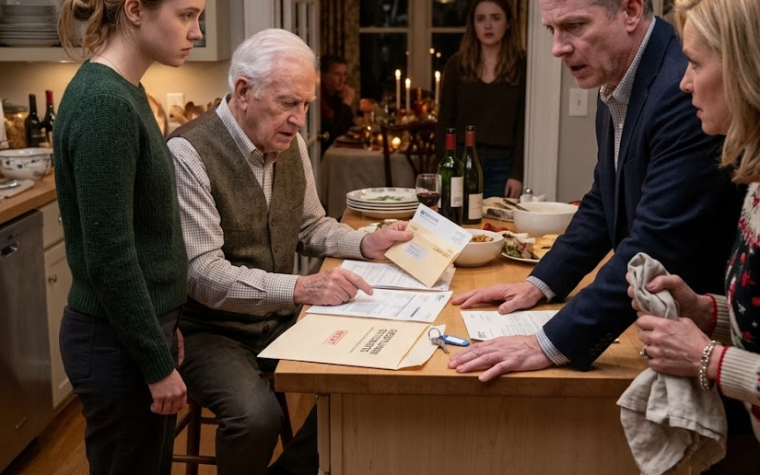
My father discovered it when the bank mailed a notice about a missed payment.
He and my mother confronted Kara.
According to a note found in his desk, they gave her two days to return the money and tell the bank what she had done.
If she refused, they planned to go to the police.
Kara arrived that evening carrying dinner and a flask of what she called calming herbal tea.
She told them she was sorry.
She told them she had a plan to fix everything.
She told them they should sit down together before anyone made a decision that could destroy the family.
The laboratory found traces of a powerful sedating substance in both mugs.
It was not prescribed to either of my parents.
The amount in their systems was dangerous enough to stop their breathing, especially combined with my father’s regular medication.
The investigators believed Kara had placed the substance in the drink, waited until my parents became weak and confused, then opened my father’s pill organizer to suggest an accidental medication mistake.
She left them unconscious and took the flask with her.
The following morning, she sent me the message about collecting the mail.
She had not chosen me because she trusted me.
She had chosen me because she knew I had been busy.
She expected me to delay.
She wanted someone else to discover our parents after enough time had passed for the scene to look less suspicious.
Instead, guilt pushed me there that same evening.
The police did not arrest Kara immediately.
They wanted the laboratory results, the financial records, and the original camera data secured before confronting her.
So for two more days, she continued pretending.
She called me repeatedly.
“Have Mom or Dad said anything?”
“Are the police still asking about the food?”
“Did Michael find what he needed at the house?”
Each question sounded concerned until I understood what she was really asking.
What do they remember?
What evidence survived?