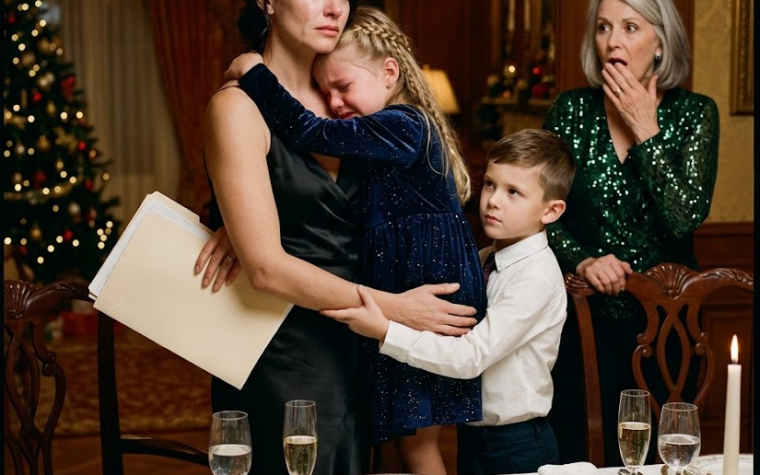
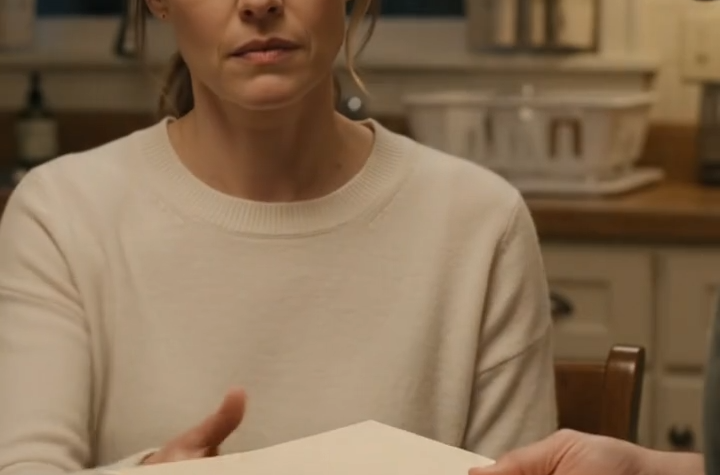
Before leaving, she paused near the place where the bread had once rolled across the floor.
“I believed that night would ruin us,” she said.
Eleanor looked at the long table, remembering how firmly she had once believed possession mattered more than mercy.
“It nearly revealed the worst in me,” she replied.
Clara shook her head.
“It revealed what you did next.”
Eleanor did not accept the words as praise.
She understood now that one kind act could not erase years of not seeing.
But it could become the beginning of a different way of living, provided it was repeated after the emotion faded.
She walked Clara and the children to the mansion doors.
Outside, the evening was cold, but each child wore a warm coat.
Clara carried enough food for the night and wages that no longer forced her to choose which necessity to abandon.
The youngest turned back and waved with a roll still clutched in his hand.
Eleanor watched them disappear beyond the gates.
Then she returned to the dining room and extinguished the chandelier herself.
The great table vanished into darkness, but she could still see the lesson it had given her.
She had once believed Clara’s secret bag contained stolen food.
What it truly contained was evidence: of hunger she had ignored, of labor she had taken for granted, and of the distance privilege could place between a person and the suffering directly in front of them.
Clara had entered that room expecting punishment for feeding her children.
She left with her work respected, her family fed, and her dignity intact.
And Eleanor, who had thought herself the owner of everything beneath that roof, finally understood that the most valuable thing in the house had never belonged to her.
It was the trust of the people who depended on her—and from that night forward, she worked to deserve it.