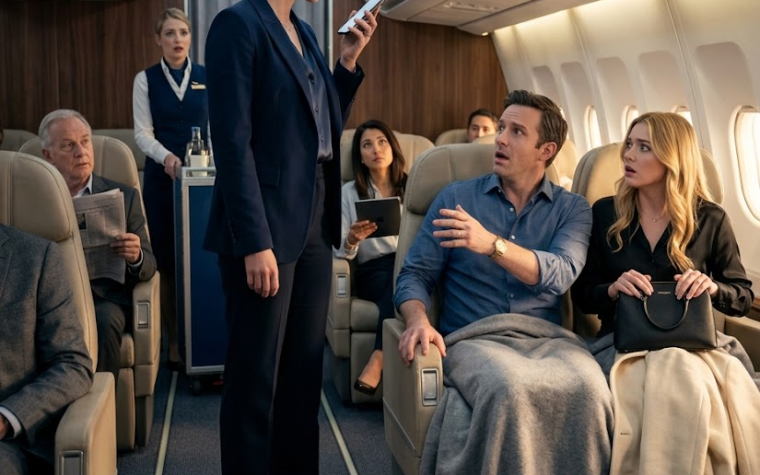
Some directors wanted to frame the incident as a rare embarrassment caused by one bad supervisor and one arrogant passenger.
That explanation would have been convenient.
It would also have been false.
“They did not fail because they didn’t recognize the chairman,” I told them.
“They failed because they believed a man they considered powerless did not deserve the rules.”
No one looked away.
I kept the pass, not as a trophy, but as evidence of how easily dignity could be reduced to a seat number when an institution rewarded the wrong instincts.
Several months later, I returned to Gate B22 wearing the same navy suit and carrying the same briefcase.
There was a new supervisor at the podium.
She did not know I was coming.
Ahead of me stood an exhausted father traveling with a young child.
Their seats had been separated after an aircraft change.
The line grew impatient while the supervisor worked through the problem.
She never dismissed him.
She never looked past him toward wealthier passengers.
She called another agent, documented the correction, and found two seats together without taking a confirmed seat from someone else.
When my turn came, she scanned my pass and handed it back with a simple smile.
“Welcome aboard.”
There was no special greeting, no whispered title, and no sudden change in her posture.
That was exactly what I wanted.
I sat in 2A on that flight, but the seat no longer felt like the victory.
The victory was knowing the man in Row 34, the woman at the gate, and the family struggling with a reservation would be treated by the same standard whether they carried a gold-plated phone or nothing at all.
Dignity had never belonged to First Class.
It belonged to every person who walked through the gate.