Mom feared that if something happened to her and Dad, my aunt would use the adoption to push me aside, especially if Lucas was still a minor.
She also knew I would likely become his guardian and spend my own money before asking the estate for help.
She had understood me perfectly.
So she had taken precautions.
Helen unfolded the legal document from the box.
It was a certified copy of a recorded deed signed nine years earlier.
Mom had transferred the house into a family trust.
She and Dad retained the right to live there during their lifetimes.
If they both died, I became the successor trustee and had the unconditional right to remain in the home.
Lucas became the trust’s equal beneficiary, but the property could not be sold until he was twenty-five unless both of us agreed.
I stared at Helen.
“My aunt said Lucas inherited the house.”
“She lied.”
Helen turned the document toward us and pointed to the recording stamp.
“The deed was filed with the county before your parents died.
Your ownership rights did not depend on probate, blood relationship, or your aunt’s permission.”
The brass key opened a safe-deposit box containing the originals, the complete trust, my adoption decree, and a recorded statement from Mom explaining why she had created the arrangement.
My aunt had not been able to destroy the plan.
She had simply counted on me never learning it existed.
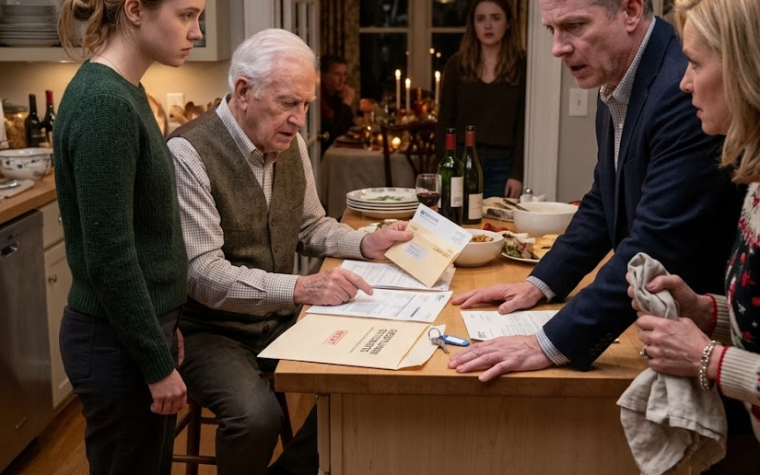
Helen examined the folder from the birthday dinner.
The first document was not an eviction notice, despite its threatening language.
It was a demand drafted by a private attorney with no authority to remove me.
The second document was more serious.
It was a quitclaim deed.
Had Lucas signed it, he would have transferred any interest he might possess in the property to a company created only three weeks earlier.
The company’s registered manager was my aunt’s husband.
Lucas turned white.
“She told me it would let her manage the house.”
“It would have allowed them to claim you voluntarily surrendered your rights,” Helen said.
“They could not legally transfer Emma’s interest, but they might have created enough confusion to force an expensive court fight.”
I thought about my aunt insisting that Lucas sign that night.
I thought about the relatives positioned around the table, the pressure, the humiliation, and the certainty with which she had told me to pack.
She had not expected the jewelry box to appear.
Lucas reached into his pocket and placed his phone on the table.
“There’s something else.”
Two weeks before his birthday, my aunt had called him.
She said she wanted to discuss his future, then asked whether he had ever seen Mom’s jewelry box.
The question unsettled him, so he recorded their next conversation.
Helen listened while my aunt’s voice filled the office.
Once Emma is out, she had said, we can sell quickly.
You are young.
You do not understand what that property is worth.
Sign what we bring, and we will handle the rest.
Lucas had asked how much he would receive.
My aunt answered, That depends on expenses.
“What expenses?” Lucas had asked.
There was a pause.
Our expenses, she said.
Helen saved a copy of the recording.
By noon, she had contacted the company listed on the deed, the attorney whose name appeared on the folder, and the county property office.
She sent formal notice that neither Lucas nor I consented to any transfer.
The private attorney withdrew from representing my aunt that afternoon.
He claimed he had been told that I was an unrelated tenant and that Lucas was the sole owner.
My aunt called repeatedly.
I did not answer.
She sent messages accusing me of turning Lucas against the family.