The recording ended.
The silence afterward was heavier than any outburst could have been.
Diane looked at me as though I had violated her by saving her own words.
“You recorded private family conversations?”
“You left them on my voicemail,” I said.
The blonde hairdresser in the gallery gathered her purse without making eye contact with anyone.
The bailiff quietly told her to remain seated until the court recessed.
Elena moved to the tax notices and utility records Diane had cited as proof that I could not manage ordinary obligations.
Each notice had been mailed to the Wyoming mailbox or to Diane’s home after online account settings were changed.
The changes came from an internet address assigned to Diane’s house.
The verification code had been sent to Diane’s phone.
Two automatic payments had been canceled from the same device.
She had manufactured the missed obligations and then photographed the resulting notices for her petition.
“I was trying to organize things,” Diane insisted.
“There were accounts everywhere.
She had frozen the operating funds and vendors were not being paid.”
“I froze one account,” I said.
“After I found the first unauthorized wire.”
That had been the moment she underestimated me most.
Three weeks after my father’s funeral, I found a transfer I did not recognize.
I did not confront Diane.
I did not accuse her at dinner or call the family.
I asked the bank for the authorization, hired Elena, and preserved every statement I could access.
Diane mistook silence for confusion.
While she built a story about my instability, Elena and I built a timeline.
By the morning of the hearing, the records connected $1.86 million in transfers to the three Wyoming companies.
Some money was still sitting in escrow.
Some had been invested.
Some had paid professionals whose work supported the claim that I was incompetent.
Diane had used estate money to finance the attempt to seize the rest of the estate.
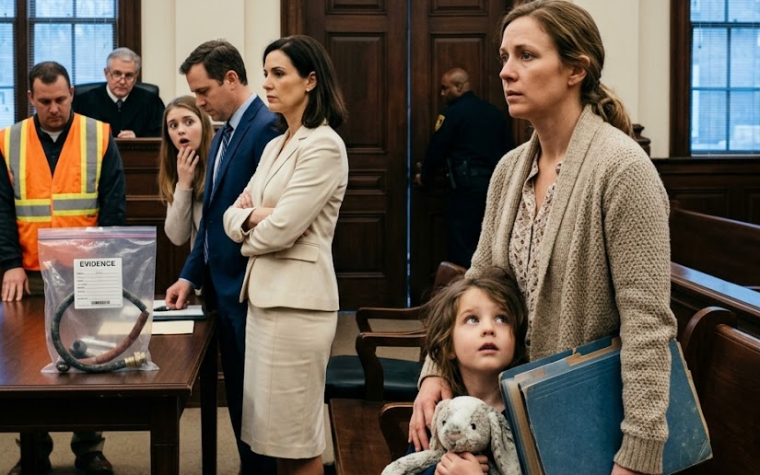
Curtis requested a recess.
Judge Alderman granted seven minutes and ordered every person connected to the petition to remain on the floor.
In the hallway, Diane stood beside the courtroom doors with Curtis whispering urgently into her ear.
Aunt Colette remained near the windows, flanked by her daughters.
None of them came toward me.
Then Diane broke away from Curtis and approached until the bailiff stepped between us.
“You do not understand what your father wanted,” she said.
Her voice was low, but the sweetness had vanished.
“He wanted the money protected.”
“From whom?” I asked.
Her eyes flicked toward the envelope in Elena’s hand.
“That is not what you think it is.”
“Then let the records explain it.”
When the hearing resumed, Elena introduced the final piece of the Wyoming production: an audio recording made by the registered agent’s compliance service.
The company recorded formation calls for identity verification.
The voice was unmistakably Diane’s.
She instructed the agent to use Colette’s name as organizer because it would appear “less connected” to the estate.
When the agent asked whether Colette would sign electronically, Diane said she already had a signature available.
The recording included a small laugh.
“She signs whatever her brother puts in front of her,” Diane had said.
“She never reads anything.”
Colette began to cry.
Not delicately.
Not with a prepared tissue.
Her shoulders folded, and one of her daughters wrapped both arms around her.
Judge Alderman called her to the witness stand.