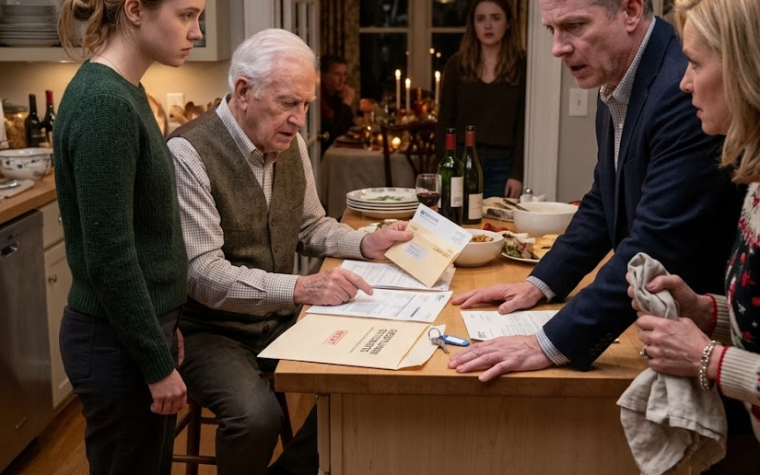
For the first time in months, he laughed.
So did I.
Then both of us stopped because the laugh sounded like something Diane should have heard.
The money never became the center of our conversations again.
That was Diane’s final gift to me, though I do not think she would have called it that.
She had removed uncertainty before uncertainty could become a weapon.
She made sure I could grieve without wondering whether I would lose my home.
She made sure the work she cared about would continue.
And she left our son something more uncomfortable than an inheritance.
She left him a mirror.
I still live in the house on Fielding Street.
Diane’s mug is no longer beside the sink.
Eventually I washed it.
That felt like betrayal the first time.
Now I drink coffee from it on Sunday mornings.
The crack near the handle has grown a little longer, so I hold it carefully.
Darnell comes by more often than he used to.
Nothing he does can change the five people who sat in that chapel.
Nothing can place him in the empty pew where his mother wanted him.
We both know that.
Forgiveness did not rewrite the funeral.
It simply gave the living somewhere to go afterward.
Sometimes, when Darnell leaves, he pauses beside the front door and looks back into the house.
I know what he sees now.
Not property.
Not an estate.
Not something waiting to become his.
He sees the kitchen where his mother made breakfast, the hallway where her footsteps once sounded, the chair that stayed pulled away from the table for weeks after she died.
He sees what almost disappeared while he was busy protecting plans that could not be refunded.
And every time I close the door behind him, I think about Diane sitting with Harold Whitfield three days before her death, signing her name while she still had enough strength to decide what came next.
She could not control who attended her funeral.
She could not force our son to answer the phone.
She could not make anyone understand the value of time before time was gone.
But she could protect the home we built.
She could decide where her money went.
She could leave one final letter telling her son what she had probably tried to teach him his entire life.
And she could make sure that when grief and money finally entered the same room, grief did not have to surrender.