Instead I said, “Grace sat on that rug without her glasses while her cousins mocked the way she sees.
Lauren can survive being uncomfortable.”
My mother took longer.
For two days, she sent variations of the same message.
Families forgive.
Lauren lost her temper.
Grace would forget if adults stopped making it a big deal.
I answered only once.
I told Mom that Grace forgetting was not the goal.
Grace understanding that adults were responsible for protecting her was the goal.
On the third day, Mom asked to speak to Grace.
I asked Grace what she wanted.
“Not yet,” she said.
So I told Mom no.
There was no negotiation.
A week later, Mom came to my apartment and apologized to me.
I stopped her.
“I’m not the person you owe the apology to.”
She nodded.
When Grace eventually agreed to see her, I stayed in the room.
Mom did not say, “I’m sorry you were upset.”
She did not say, “I’m sorry, but Lauren was angry.”
She said, “I saw what happened, and I should have stopped it.
I didn’t.
That was wrong.
You did not deserve it.”
Grace listened without moving.
Then she asked, “Why didn’t you help me?”
My mother cried.
But this time she answered.
“Because I was scared of making Lauren angrier, and I made the wrong choice.”
Grace thought about that.
“Okay,” she said.
Not forgiveness.
Not rejection.
Just a seven-year-old processing an adult’s answer.
It was enough for that day.
Lauren never gave Grace anything close to that apology.
She sent messages through my parents.
She said I had exaggerated.
She said the report had embarrassed her.
She said I had turned her own children against her by making what happened sound frightening.
I refused every attempt to change the subject from her behavior to my reaction.
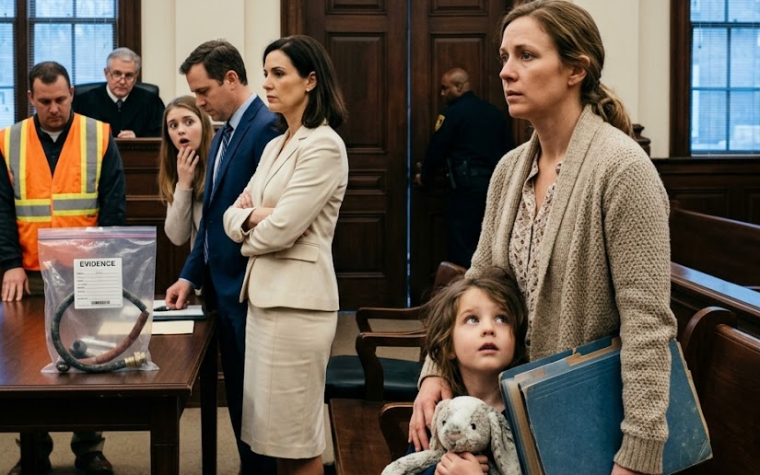
The outside follow-up was quiet and procedural, not the dramatic scene Lauren had apparently imagined.
Questions were asked.
Accounts were recorded.
The fact that Grace was safe with me mattered.
So did the fact that I had immediately ended unsupervised access.
No movie-style squad of officers appeared at the house.
No one dragged Lauren away.
Reality was less theatrical and, in some ways, more uncomfortable.
There was now a record.
There were photographs.
There was an independent description of the damaged glasses.
There were admissions Lauren had made herself because she had been so certain that what she did counted as discipline.
And there were boundaries she could not argue her way around.