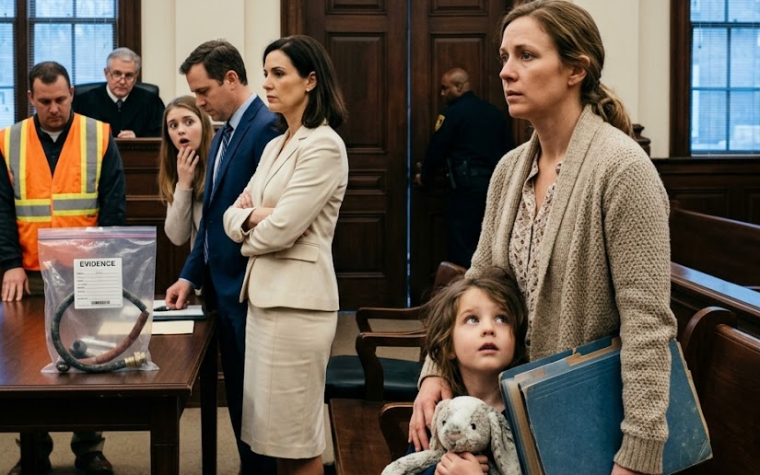
Violating it would risk immediate imprisonment.
The divorce court treated his intimidation and financial control as evidence when dividing property and setting support.
He did not lose everything, as dramatic stories often promise.
He lost something more important to him: the ability to decide what everyone else was allowed to know.
His company removed him from public-facing duties after the conviction became part of the record.
Several organizations quietly removed his name from their boards.
Friends who once repeated his version of events stopped returning his calls when they learned they might be asked to testify about what he had told them.
He remained wealthy.
He was no longer untouchable.
My daughter was born five weeks after the final protective order was entered.
She arrived early, furious, healthy, and loud enough to fill the delivery room.
My brother stood outside until the nurse invited him in.
When he saw her, the same officer who had remained perfectly controlled inside L’Élégance covered his face and cried.
I named her Grace.
Months later, I returned to the boutique for the first time.
The damaged display had been replaced.
The manager met me near the entrance and apologized for not moving sooner that day.
“You pressed the alarm,” I reminded her.
“I still hesitated.”
“So did I,” I said.
The cashier came from behind the counter and asked whether she could see the baby.
Grace slept against my chest, one tiny hand curled beneath her chin.
The socialite was not there, but she had sent a note through the manager.
It contained only one sentence: I am sorry I looked away before I spoke.
I folded the note and placed it in my handbag beside a copy of the final court order.
For a moment, the smell of perfume pulled me back to the cracked glass, James’s hand around my wrist, and the certainty that the room had chosen him.
Then Grace stirred.
I felt her heartbeat against mine.
Above us, the heavy brass bell chimed as another customer entered.
This time, I did not flinch.