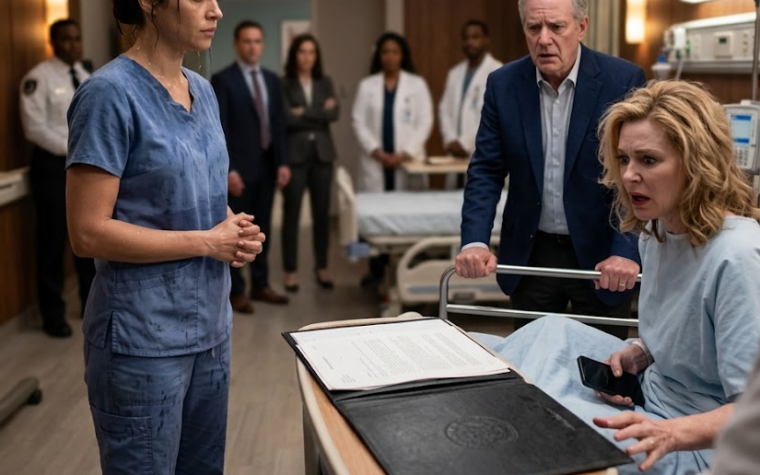
The investigator placed photographs on the table beside my bed.
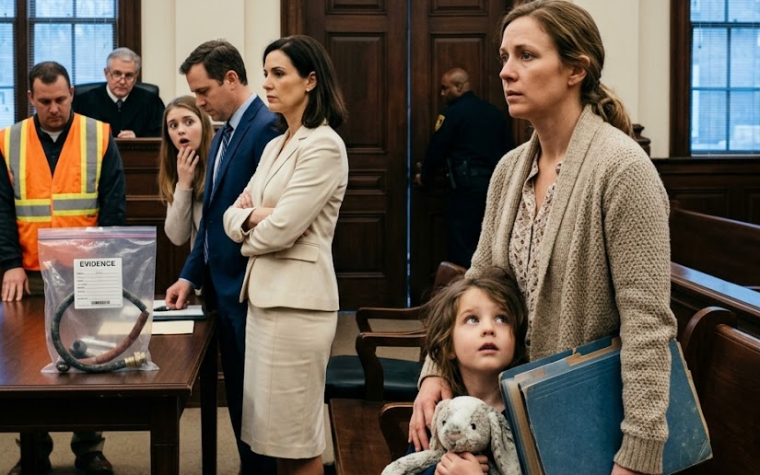
The first showed the recovered red device.
The second showed fragments of our satellite radio scattered beside a boulder.
The third showed two sets of boot prints leading away from the cliff.
The storm had buried most of the tracks, but not all of them.
“We need Michael to believe his plan worked,” he said.
I stared at him.
“He thinks I’m dead?”
“He reported you missing shortly after returning from the ridge.
He claims you walked away during an argument and fell before he could reach you.
He says Ashley remained near the trail.”
A laugh escaped me, dry and painful.
“He rehearsed it.”
“Yes.”
The investigator explained that the black helicopter belonged to a specialized alpine rescue unit operating nearby during the storm.
Its crew had been asked to search Devil’s Cradle after Michael’s report, but Michael had given rescuers a false location farther east.
The aircraft had searched his coordinates and found nothing.
On the return route, a crew member noticed a brief red pulse through the snow—the final flashes from the predator lure before I destroyed it.
The device Michael intended to use against me had guided the helicopter to my body.
I closed my eyes.
For the first time since the fall, I felt something other than fear.
Not relief.
Leverage.
The investigator wanted to keep my survival confidential while evidence was collected.
The hospital registered me under restricted status.
Only the medical team, rescue crew, and investigators knew where I was.
Michael was told that search teams had found blood and signs of a catastrophic fall but could not safely recover a body from the canyon.
He accepted that explanation almost immediately.
Too immediately.
He began arranging a memorial before the official search ended.
From my hospital bed, I listened as the investigator played recordings of Michael’s calls.
His voice was controlled and impatient.
“My wife was nearly eight months pregnant,” he told one official.
“We need closure.”
Closure.
He used the word as though he were asking someone to finish paperwork.
Ashley supported his version of events.
She claimed I had become emotional while talking about my mother, pulled away from Michael, and vanished into the storm.
She said the satellite radio slipped from her hands and broke when she tried to call for help.
But the fragments told a different story.
The radio had not been dropped once.
It bore multiple impact marks.
Tiny pieces of its casing were embedded in the boulder where I had seen Ashley strike it.
The predator lure carried more.
Its serial number led investigators to an online order placed weeks earlier.
The payment came from a card connected to Michael.
The package had been delivered to his office, where Ashley had signed for it.
They had planned the mountain long before inviting me there.
Investigators also examined the route Michael had chosen.
He told friends it was a sentimental trip meant to help me honor my mother.
In reality, he had studied old reports about her death and selected the same ridge because its weather, unstable rock, and poor communications made recovery difficult.
He had turned my grief into part of his alibi.
That discovery hurt more than my broken bones.
My mother’s death had shaped every year of my life.
Michael had held me through anniversaries, listened to stories about her, and promised that one day we would visit the place together so I could say goodbye.
I had mistaken his attention for love.