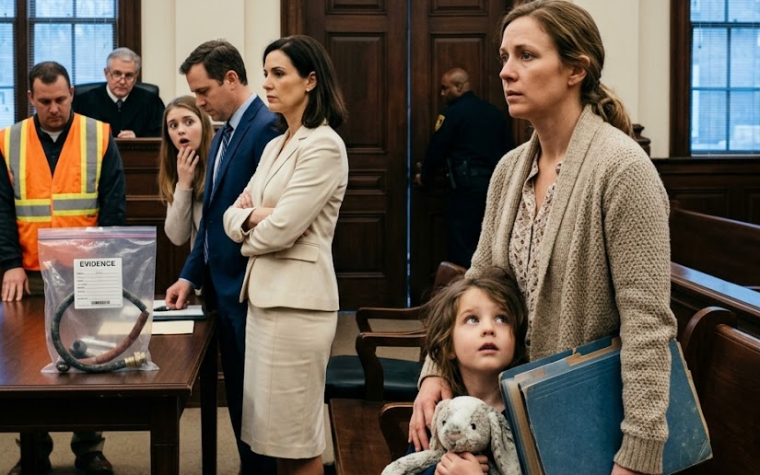
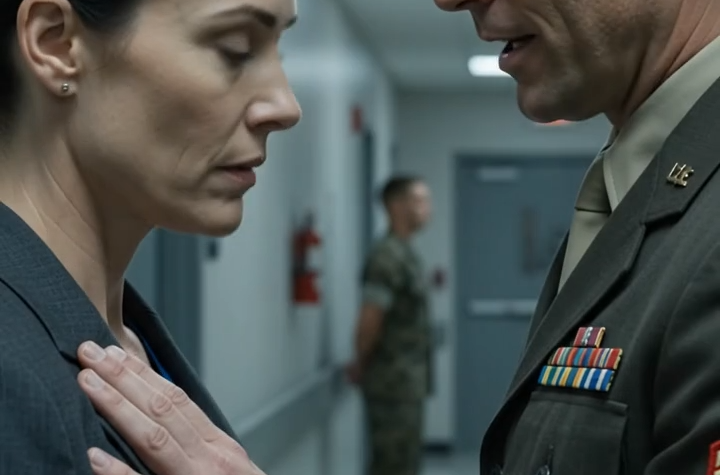
There was my phone, preserved with messages I had nearly convinced myself did not matter.
There was Ray sitting in the corner eating one crushed apple muffin because he had forgotten to eat all day.
And there was Eli.
Every time fear began pulling me toward the old instinct to make peace at any cost, I looked at him.
Caleb sent messages until he was told to stop contacting me directly.
The first messages were furious.
Then apologetic.
Then furious again.
He blamed exhaustion, pressure, his father, me, the argument over Eli’s name, and finally Ray.
What he never wrote was simple responsibility without an excuse attached.
Martin contacted me once through the proper channel and offered to “resolve matters privately.” I declined.
Ray’s old military papers did not magically decide my future.
They were not evidence of what Caleb had done to me.
Their importance was different.
They showed me the pattern I had been trained not to see.
Martin had spent decades calling intimidation leadership.
Caleb had grown up watching that behavior treated as strength.
Then he brought the same belief into our marriage and expected me to call it love.
But history did not excuse either man.
It only explained why Martin went pale when he saw Ray’s tattoo.
He remembered the one person from his past who had looked directly at his power and refused to rename it.
Now that person was standing beside me while I learned to do the same.
In the weeks that followed, the documentation from the hospital and Caleb’s own messages became far more important than Ray’s old envelope.
Lawyers handled what needed to be handled.
Contact became structured.
Decisions about Eli were no longer made by whoever spoke the loudest in a room.
Caleb discovered that saying “this is how my family works” did not create a law everyone else had to obey.
Martin discovered something too.
His money, confidence, and reputation could not erase a hospital record or force me into a private conversation I did not want.
Ray never threatened either of them.
That surprised Caleb most.
Months later, I asked my uncle why he had removed his hearing aids that afternoon.
He smiled.
“I was angry.”
“That’s it?”
“I knew your husband was going to keep talking.
I also knew if I listened to every stupid thing he said while I was that angry, I might say something stupid back.”
I laughed for the first time about any part of that day.
“And you told me to close my eyes.”
His smile faded.
“I thought you were scared.”
“I was.”
“I wanted you to have one second where you didn’t have to watch everybody else’s face.”
That answer stayed with me.
For years, I had watched faces.
Caleb’s when I disagreed.
Martin’s when I spoke too confidently.
Everyone else’s when a joke went too far and I had to decide whether objecting would make the evening worse.
I had become an expert at measuring other people’s reactions before allowing myself one of my own.
Eli changed that.
Not because motherhood suddenly made me fearless.
I was afraid often.
But fear stopped being the final vote.
One afternoon, months after the hospital, Ray came to visit carrying another paper bag of apple muffins.
Eli was asleep against my shoulder.
Ray looked at him and said, “Still Eli?”