The mission name at the top of the page was NIGHT LANTERN.
For six years, I had trained myself not to react when I saw those words.
They had appeared on sealed reports, encrypted briefings, medical evaluations, and one citation that had never been publicly presented.
They had never appeared beneath my brother’s signature.
I looked from the page to Mason.
He was still standing near the stage, but the confidence had gone out of his posture.
His shoulders were rigid.
One hand was pressed flat against the seam of his dress uniform as if he could hold himself together by force.
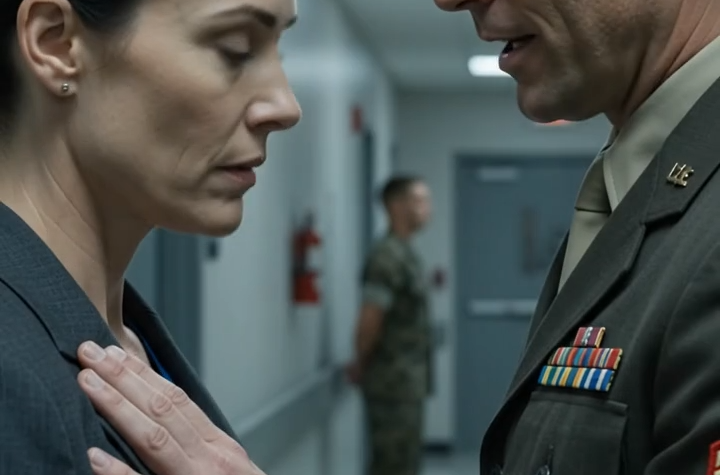
The captain watched my face.
“Do you recognize the operation?” he asked.
“Yes.”
“Were you its field commander?”
“Yes.”
A murmur moved through the room.
My father turned sharply toward the people behind him, offended that they had made a sound.
Then he looked back at me, searching my plain clothes for evidence that everyone else had somehow misunderstood.
Mason finally stepped forward.
“Captain, this is an administrative issue.
It doesn’t belong here.”
The captain closed the folder halfway.
“You were instructed to remain in position, Lieutenant Reed.”
Mason stopped.
The title should have sounded respectful.
In that room, it sounded like a restraint.
The captain turned back to me.
“Admiral Whitaker asked that the formal portion of today’s ceremony be delayed until you reviewed this statement.”
My father found his voice.
“Delayed?”
No one answered him.
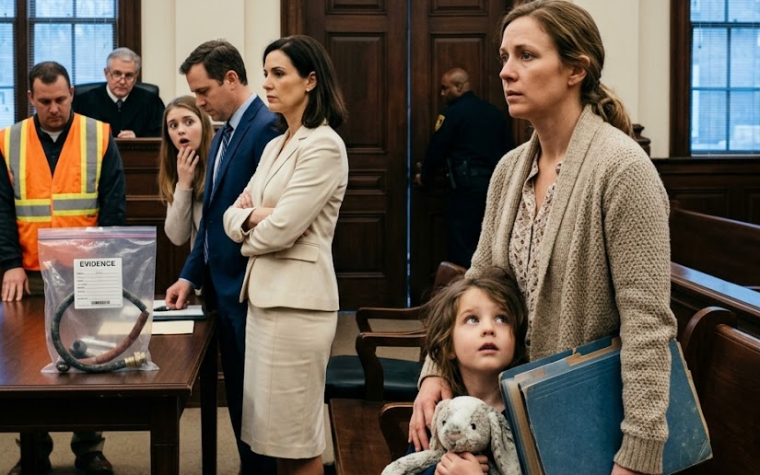
He stepped into the aisle.
“This ceremony has been planned for months.
Family traveled across the country.”
The captain’s expression did not change.
“Sir, return to your seat.”
My father stared at him.
Grant Reed had spent his life treating authority as sacred, provided it pointed in the direction he preferred.
Being corrected by a man in uniform left him visibly divided between obedience and outrage.
He sat.
The captain handed me the folder.
The first page was a sworn supplemental statement attached to Mason’s service record.
It described an emergency extraction conducted during NIGHT LANTERN.
According to the statement, Mason had identified a navigation error, transmitted corrected coordinates, and prevented an aircraft carrying a SEAL element from entering a hostile corridor.
The final paragraph said his contribution had remained unrecognized because the mission was classified.
Below it was his signature.
The date beside it was eight months old.
I turned the page.
There were access logs, routing records, and a recommendation for a special commendation to be announced during his advancement ceremony.
The recommendation credited Mason’s “decisive operational intervention” and stated that the mission commander could not be contacted without compromising an active assignment.
That mission commander was me.
My name appeared only as a black bar followed by an identification number.
Mason had counted on the black bar protecting him.
I read the statement again, more slowly.
The event it described had happened.
Our extraction aircraft had received coordinates that would have carried us directly across a monitored coastal battery.
The correction had reached us less than two minutes before the pilot committed to the route.
But Mason had not sent it.