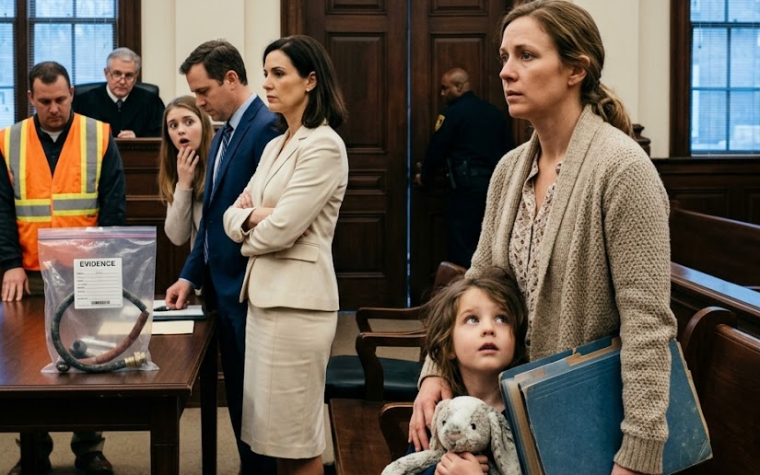
A moment later, Madison snapped, “Well, she knew we needed help.”
I almost stood up.
Instead, I stayed seated.
That was new for me.
For years, every accusation had pulled me into defending myself.
I would explain my schedule, my reasons, my exhaustion.
I would try to make them understand that I was allowed to have limits.
That morning, I finally understood that explanations had only given them material to argue with.
No was enough.
Officer Daniels returned fifteen minutes later.
“Your brother says they believed you would cool down and come over this morning.”
I stared at him.
“He believed I would magically know they had left four children alone?”
“He says your mother planned to call you.”
I looked at my phone.
Mom’s messages from the night before were still there.
None said anything about a morning handoff.
None gave a time.
None said the children would be alone.
Officer Daniels asked if he could see the messages voluntarily.
I handed him the phone.
He read through them without comment.
Ryan’s messages were angry but vague.
Stop acting like this.
Mom needs everyone together right now.
We’ll talk tomorrow.
Madison’s was the sharpest.
You’ll get over yourself.
Then came Mom’s message from that morning, sent after the police had already contacted me.
Call me before you talk to anyone.
Officer Daniels looked up.
“There’s nothing here showing you agreed.”
“Because I didn’t.”
He returned the phone.
A child-services worker met with me later that morning.
She asked many of the same questions, but hers carried a different weight.
How often had I provided childcare?
Had the children been left expecting me before?
Did Ryan and Madison regularly depend on relatives without confirming availability?
I answered carefully.
They had dropped the children off with little notice before, but until then, there had always been an adult transfer.
A knock at my door.
A call from Mom.
A frantic request framed as an emergency.
This was different.
This time, they had left first and counted on pressure to fill the gap.
The worker asked whether my parents could provide temporary supervision.
“They’ll say yes,” I told her.
“Would that be safe?”
“Yes.
They’re capable.”
“Then why haven’t they been the regular caregivers?”
That question almost made me laugh.
Because they had me.
I didn’t say it that way.
I simply answered, “Because they always expected me to do it.”