I studied opponents on my lunch break and returned to the office after tournaments with bruises hidden beneath long sleeves.
There were matches where I looked terrible.
There were days when younger players ran me from corner to corner until I wondered whether my family had accidentally been right about one thing: maybe I had waited too long.
Then I remembered the station platform.
No more pretending humiliation was family.
That promise had changed something in me.
I no longer needed tennis to prove my parents wrong.
I needed to find out how far I could go without their voices inside my head.
The answer came faster than anyone expected.
I won a qualifying event.
Then another match against a player everyone expected to beat me easily.
Sports pages began using phrases like late breakout and improbable run.
Cameras appeared near courts where, months earlier, only coaches and a few spectators had watched.
At work, my coworkers stopped pretending my weekend tennis was just a hobby.
My manager called me into his office after one tournament and turned his monitor toward me.
A clip of my final point was playing.
“Emma,” he said, “I think you need to admit this is becoming something.”
I laughed.
“I know.”
He smiled.
“Good.
Because half the office watched you yesterday.”
It was strange being celebrated by people who had known me for only a few years while the people who had known me my entire life still believed there was nothing worth seeing.
My parents tried contacting me during that period, but not to apologize.
My mother sent a message saying Maria was under terrible pressure.
My father left a voicemail saying family members help each other.
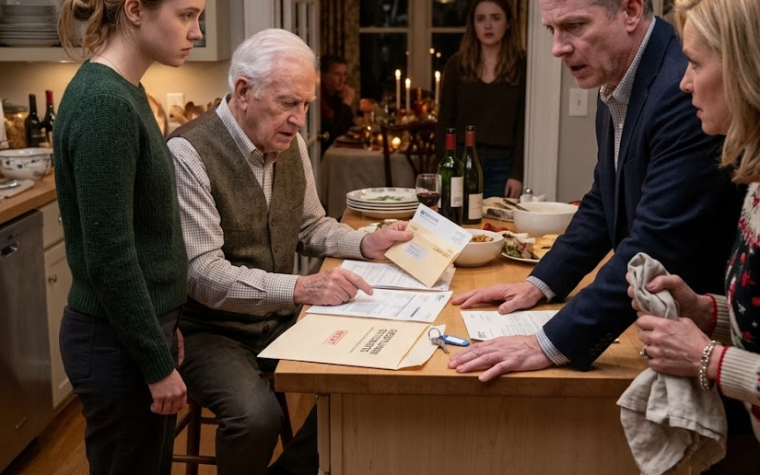
Maria sent me a photograph of an expense statement and wrote, “Fix this.”
I saved everything.
I answered none of it.
Then one evening, my aunt called.
Unlike my parents, she didn’t begin with a demand.
“Emma,” she said quietly, “I should have said something at Christmas.”
I sat down on the edge of my bed.
The apology was simple.
That made it harder to hear.
She told me several relatives had felt ashamed after I left.
They had watched my mother insult me, watched Maria pile on, and chosen silence because confrontation was uncomfortable.
“Silence helped them,” I said.
“I know.”
There was no excuse after that.
I respected her more for not inventing one.
Before we ended the call, she told me something else.
My parents had been telling relatives that they had paid Maria’s medical-school enrollment themselves.
I stared at the wall.
That hurt in a way I hadn’t expected.
They hadn’t merely accepted my money while insulting my education.
They had erased me from the payment too.
The next morning, I pulled out the Harbor Ridge confirmation, the St.
Catherine donor receipt, and the student finance email.
I scanned copies into one folder.
Then I put the originals in a safe place.
I didn’t post them.
I didn’t send them around the family.
I didn’t need revenge.
I needed the truth where nobody could rewrite it for me again.
Meanwhile, tennis kept moving.