My attorney answered with four attachments.
The divorce judgment.
The revocation notice.
His signed declaration.
The hallway recording in which Victoria announced that my money belonged to their family.
Richard’s explanation changed before the day ended.
Now he claimed he had not known Victoria kept the key.
The security footage showed him watching calmly as she removed it from her handbag and inserted it into my lock.
Then he argued that he came only to prevent a confrontation.
The footage showed him telling me to open the door before things got worse.
Every version collapsed against something he had said or done on camera.
My attorney sent the financial demand the following morning.
It did not seek every dollar Victoria had spent during my marriage.
Much of that money was gone, and chasing all of it would have kept me tied to the Bennetts for years.
The demand focused on charges made during the separation after authorization had been withdrawn, along with the costs created by the attempted entry: security changes, legal work, and enforcement of the divorce terms.
Richard responded with outrage.
Then bargaining.
Then silence.
The matter returned to court because his sworn declaration had been part of the final settlement process.
The hallway footage made the issue painfully simple.
He had certified that every key was returned.
The next morning, his mother appeared with one while he stood beside her and demanded access.
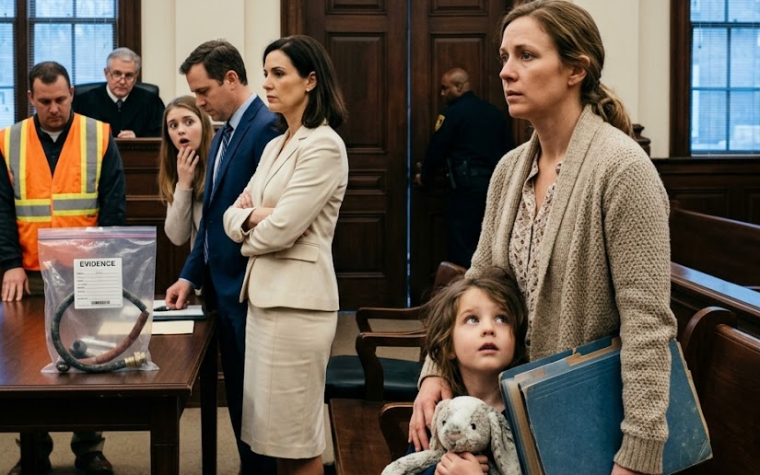
Victoria attended the hearing in pearls and a dark suit, carrying herself as though posture could overrule evidence.
When asked why she had kept the key, she said it had been given to her years earlier.
When asked why she used it after I revoked permission, she said she did not believe my decision was reasonable.
When asked whether she believed the credit card belonged to her, she paused.
Her attorney advised her not to answer.
The recording answered for her.
Your money became family money.
That card was part of the arrangement.
Her own voice filled the courtroom.
The confidence vanished from her face.
Richard’s claim that he knew nothing about the key was rejected.
He was ordered to comply with the settlement, cover the documented costs caused by the incident, and resolve the unauthorized separation-period charges through a repayment agreement.
The amount did not destroy him.
That was never my goal.
But it forced him to pay for something he had spent years pretending was free.
Victoria lost the card, the key, and the protection of her son’s excuses.
The building barred her from returning without my written invitation.
There would be no more surprise visits, no more demands in the lobby, and no more using Richard’s former status as permission to reach me.
Weeks later, a box arrived through the attorneys.
Inside were several purchases Victoria had made shortly before the account was closed.
Some could be returned for credit.
Others were sold, with the proceeds applied to the balance.
Among them was a silk scarf I remembered her wearing to a dinner where she told the table that women who cared too much about their careers eventually became lonely.
That night, Richard had laughed softly and asked me not to be sensitive.
I held the scarf for a moment, feeling the smooth fabric slide through my fingers.
Then I placed it back in the box.
I did not need a souvenir.
Richard never apologized directly.
Through his attorney, he said he regretted that the morning had escalated.
It was the kind of apology that treated escalation like weather—something that simply arrived instead of something he and his mother created.
I did not answer.
The most important consequence was not written in the court order or repayment agreement.
It was the silence that followed.
No calls during breakfast.