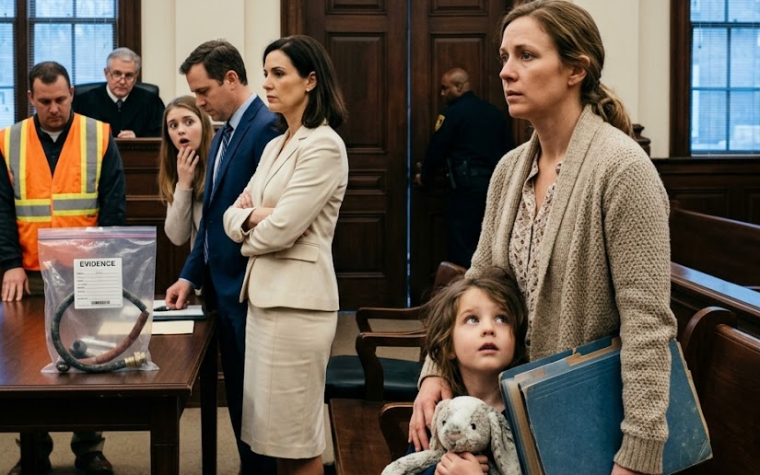
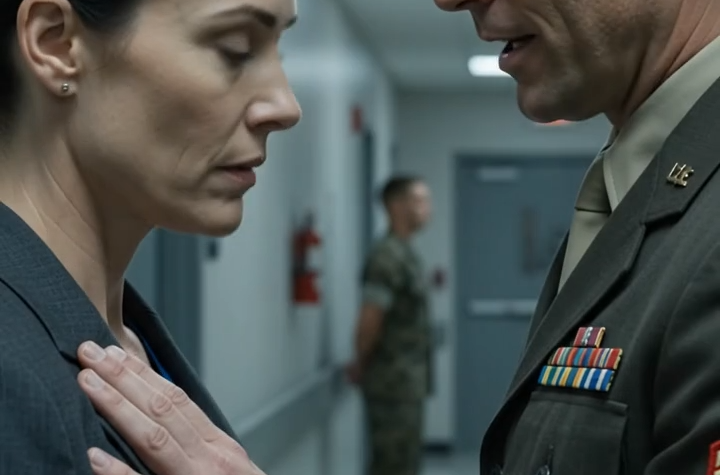
The preserved videos, revision logs, emails, check, office recording, and witness statements established a pattern of intimidation and interference.
Richard’s attorneys argued that the check was an act of generosity.
They called his threats emotional language.
They accused me of using my position for personal revenge.
That argument failed because I had disclosed my conflict before the investigation began and had never participated in searches, interviews, or charging decisions.
The evidence did not belong to me.
It spoke without me.
Richard was ultimately convicted of attempting to obstruct the investigation, coercing a public employee, and interfering with evidence.
The court barred him from contacting my daughter or approaching her school.
He was ordered to pay restitution and damages through separate proceedings, and his family foundation lost its role in district projects.
The principal cooperated, but cooperation did not erase what he had done.
The school board terminated him after a public hearing.
His professional license was reviewed, and every disciplinary decision he altered was reopened.
Max entered the juvenile system, where the focus was accountability, supervision, counseling, and rehabilitation.
He was removed from Oak Creek Elementary and required to complete a long-term behavioral program.
None of those consequences repaired my daughter’s arm.
None erased the moment she fell.
But they ended the protection that had allowed Max to believe cruelty was a privilege inherited from his father.
My daughter spent two nights in the hospital.
The concussion symptoms faded slowly.
For weeks, bright lights gave her headaches.
She slept with her cast propped on pillows and called for me whenever she dreamed about the stairs.
The morning after the principal’s office confrontation, she woke and studied my face.
“Did he get away with it?” she asked.
I sat beside her and took her uninjured hand.
“No.”
Her eyes filled with tears.
“Because you’re an investigator?”
I thought about the badge, the state team, the preserved server, and all the people who suddenly found courage after Richard lost control of the room.
“Those things helped people listen,” I said.
“But this started because you told the truth.”
She was quiet for a moment.
“I was scared.”
“I know.”
“Does it still count if I was scared?”
“It counts more.”
Months later, when her doctors cleared her to return to school, Oak Creek had an interim principal, an independent reporting system, and a rule preventing donors from participating in student discipline.
The stairwell camera remained above the landing, but my daughter no longer looked at it when she climbed the steps.
She looked forward.
On her first day back, she paused at the bottom of the staircase.
I stood beside her without touching her, giving her room to decide.
She took one step.
Then another.
At the top, she turned and smiled.
Richard once told me money was what survived.
He was wrong.
Money had purchased silence for a while.
It had purchased polished offices, obedient smiles, and the illusion that consequences belonged only to other people.
But it could not purchase the truth once my daughter spoke it.
It could not purchase the evidence after it was preserved.
And it could not purchase the ending Richard believed he owned.
My daughter reached for my hand as we walked down the hallway together.
Her arm had healed, though a faint scar remained near her elbow.
She did not hide it.
Neither of us hid anymore.