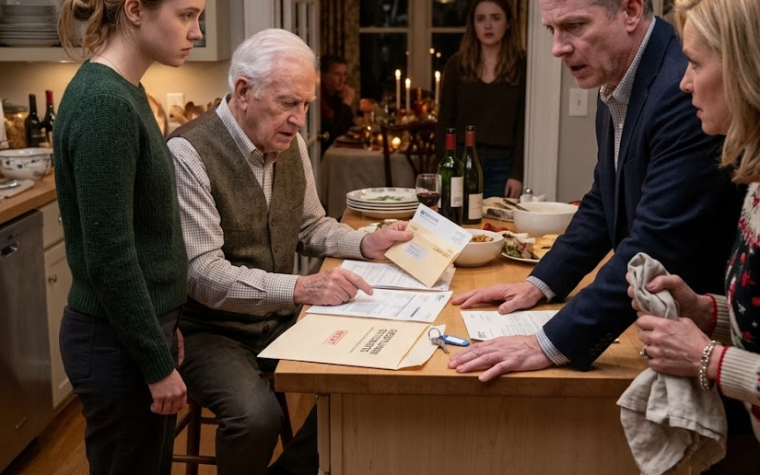
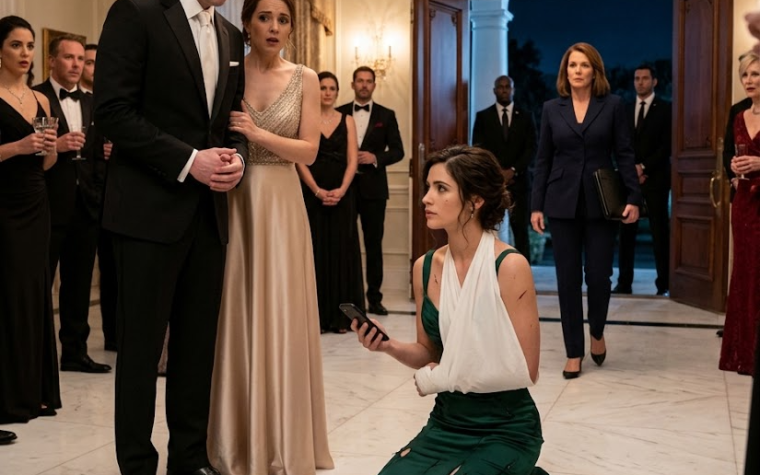
Jonah’s mother flinched.
“I accepted because I was behind on rent and caring for my brother.
I am not proud of every reason I entered that marriage.
But being desperate does not make my signature yours.”
One of the board members finally raised his head.
Jonah’s cousin leaned back.
“You signed the form.”
“No.”
“We have the original.”
“You have a forgery copied from my marriage license.”
His attorney whispered to him, but he brushed her aside.
“That is absurd.”
Jonah’s lawyer opened the box and removed three transparent evidence sleeves.
The first contained the prison marriage license.
The second contained the proxy.
The third contained several of my original letters to Jonah.
A forensic document examiner had compared them overnight.
The proxy signature reproduced an ink skip found on the marriage license, including a tiny accidental mark caused by grit beneath the paper.
A genuine second signature could not naturally reproduce the same flaw in exactly the same location.
The examiner’s preliminary report called it mechanical tracing.
Jonah’s cousin said the report was purchased.
Then the charity’s former accountant entered the room.
She was the witness who had left the state after testifying against Jonah.
Her face looked pale, but her voice remained steady.
She explained that Jonah’s cousin had shown her altered ledgers and threatened to accuse her of participating in the theft unless she supported the prosecution’s version.
After Jonah’s conviction, she had moved away and tried to forget what she had done.
When the case was reopened, she had turned over an old backup drive containing the original accounting files.
Those files showed that several transfer approvals had been created after Jonah was already in custody.
They also showed that the forged spousal proxy had been used to block an independent audit.
One board member asked why the original charter had never been presented during Jonah’s trial.
Everyone looked toward Jonah’s mother.
She stood slowly.
“I knew the clause existed,” she said.
Jonah closed his eyes.
His mother gripped the edge of the table.
“My nephew told me the charity would collapse if Jonah’s seat remained inactive.
He said we needed a legal spouse who could transfer the temporary authority back to the family.
I believed Jonah was innocent, but I was afraid of scandal.
I found a woman who needed money and told myself I was helping both of them.”
Her gaze reached me.
“I did not tell her what the marriage would do.”
“Did you give her the proxy?” Jonah’s lawyer asked.
“I gave her paperwork my nephew prepared.
She refused to sign anything with blank sections.”
The cousin’s chair scraped against the floor.
“This is ridiculous.
She was supposed to sign the proxy, not inspect every page like an attorney.”
Silence followed.
His lawyer turned toward him with alarm.
The court reporter’s hands remained poised above the machine.
Jonah’s cousin seemed to hear his own words only after everyone else had absorbed them.
He tried to recover.
“I meant that was the understanding described to me.”
“No,” I said.
“You meant you expected a desperate woman to be careless.”
He pointed at Jonah.