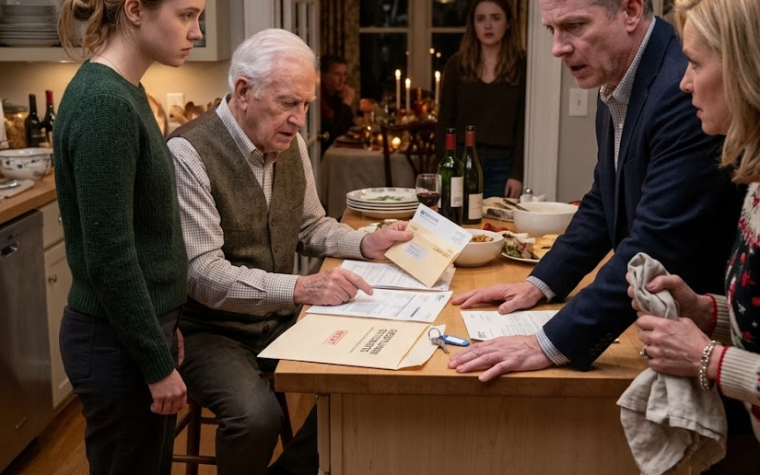
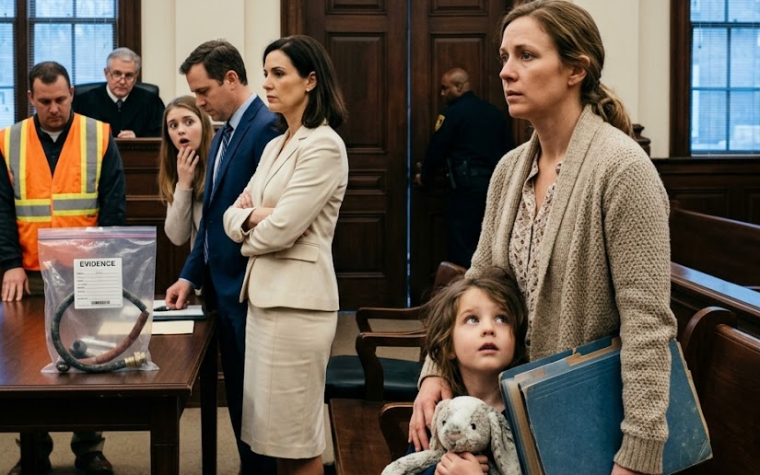
Two school events.
One Christmas we had skipped because flights were expensive.
“Yes,” I said.
She began crying.
I did not.
Not then.
Harold wanted the family to treat what he had done as a successful sacrifice with poor communication.
Our children did not cooperate.
Our son refused to move into Wexford Lane.
He returned the keys and stayed where he had been living while the lawyers worked through the financial questions.
Our daughter stopped accepting Harold’s claim that he had done everything for the family.
“You don’t get to do something for us by lying to Mom,” she told him.
Eventually, Harold and I separated.
The legal process was slower and less cinematic than people imagine.
There was paperwork, financial disclosure, appraisals, uncomfortable meetings, and arguments over numbers that had once been invisible to me.
The Wexford Lane house became part of that accounting rather than a secret symbol Harold controlled.
It was ultimately sold.
The proceeds, along with the other assets accumulated during our marriage, were addressed in the settlement.
Harold did not lose everything.
Neither did I.
There was no dramatic judge pointing a finger and declaring a villain.
There was simply a record.
And for the first time, I could see the record too.
Months later, after moving into a smaller place of my own, I bought a washing machine.
Nothing fancy.
I stood in the appliance store comparing models out of habit until I caught myself calculating whether wanting the quieter one was irresponsible.
Then I laughed.
I bought the quieter one.
I scheduled the dental work I had postponed.
I booked a flight to Phoenix.
None of those things were revenge.
They were ordinary decisions, which was precisely why they mattered.
For years, Harold had made ordinary choices feel like moral failures unless he approved them first.
The strangest part was that I still clipped coupons sometimes.
I still compared prices.
I still saved leftovers.
Frugality had never been the enemy.
The lie was.
People asked later whether I wished the person behind that door had been a stranger.
A mistress would have been easier to explain.
Everyone understands that kind of betrayal immediately.
What happened to me was quieter.
My husband had taken something that should have belonged equally to both of us—the truth about our own life—and kept it in an account only he could see.
The $200,000 check merely gave the secret an address.
For fifteen years, I thought our small life was something Harold and I were enduring together.
Standing in that unfamiliar kitchen on Wexford Lane, I learned he had been living with choices I was never allowed to know existed.
The marriage did not end because he bought our son a house.
It ended because he believed he had the right to decide what I was allowed to know, what I was allowed to need, and what version of reality I was expected to live inside.
I had spent years thinking dignity meant making do without complaint.
I know better now.
Sometimes dignity is opening the folder, reading the number for yourself, and refusing to close it again.