Joy reached for her belongings.
I stopped her.
“You entered our home and photographed private documents.”
Mrs.
Potts’s smile flickered.
“I saw an old picture.
That is hardly a crime.”
“You sent it anonymously.”
“I thought you deserved to know what kind of woman raised you.”
“What kind?”
Her chin lifted.
“A liar.
A woman who took another woman’s husband and then pretended to be some noble stepmother.”
Joy’s face tightened, but she remained silent.
Mrs.
Potts had expected that silence.
She mistook it for weakness.
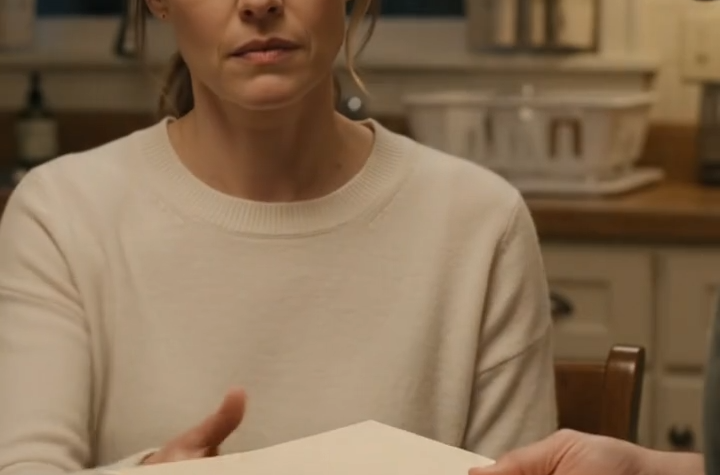
I opened the folder and held up the original record, keeping the private details turned toward me.
“Joy gave birth to me before my father married the woman who raised me.
That woman knew the truth and asked Joy to return when she became ill.”
Mrs.
Potts blinked.
“Anyone can make a paper.”
“This is a certified record.”
Her gaze shifted toward the neighbors opening their doors along the hallway.
I continued.
“You entered without permission, copied medical and family documents, and used them to harass a sick tenant.
The university legal clinic has already advised me to document everything.”
The confidence drained from her face.
“I was only trying to help.”
“No,” I said.
“You were trying to humiliate a woman because her work made you feel superior.”
One of the neighbors stepped into the hallway and said she had also seen Mrs.
Potts enter our apartment without notice.
Another admitted she had been threatened with eviction after complaining about a broken heater.
Mrs.
Potts ordered everyone back inside, but no one moved.
For years, she had survived on other people’s silence.
That evening, the silence ended.
The housing complaint did not make us rich, and it did not transform Mrs.
Potts into a kinder person.
It did force her to withdraw the immediate eviction threat.
Two months later, after the city cited several safety violations in the building, Joy and I moved into a modest rental closer to the hospital.
Her specialist confirmed that the mass seen on the MRI required surgery.
The weeks that followed were worse than my dissertation defense.
There were tests, consultations, insurance arguments, and nights when Joy tried to convince me she was not worth the expense.
Each time, I placed my diploma where she could see it.
“You paid for this,” I told her.
“Now let it work for you.”
The surgery was successful.
The mass proved noncancerous, though her recovery was slow.
For months, she could not lift heavy bags or walk long distances.
She never returned to collecting trash.
I began my laboratory position and sent most of my first paychecks toward the cabin debt.
Joy kept every receipt in the same cardboard box that had once held the secret of my birth.
Three years later, we drove to the countryside together.