William was removed from clinical duties after administrators learned that he had attempted to use his professional connections to create a false psychiatric narrative about his injured wife.
The Garcia family responded exactly as Thomas predicted.
First, they denied.
Then they attacked.
Their public relations adviser circulated a statement describing Clara as a troubled young woman experiencing an emotional crisis related to pregnancy.
Anonymous messages appeared online claiming she had married William for money.
A gossip account posted photographs of the small rental apartment where she had lived before the marriage.
Clara saw the posts from her hospital bed.
“Maybe I should stop,” she said.
“They’ll destroy everyone around me.”
I pulled a chair beside her.
“Look at me.
They are not exposing your shame.
They are displaying theirs.”
She shook her head.
“People believe them.”
“Some will.
Evidence does not need everyone.
It needs the right people in the right room.”
Thomas entered a few minutes later.
He looked older than I remembered, silver at the temples, but his voice was unchanged.
He placed a blue folder on Clara’s tray table.
“This is the part they did not expect,” he said.
Inside were records Thomas’s investigators had gathered from prior confidential settlements involving Tabitha.
Two former employees had accused her of physical intimidation.
A college roommate had obtained a protective order after Tabitha attacked her during an argument.
In each case, the Garcia family had paid for silence without an admission of wrongdoing.
The settlements could not simply be publicized, but their existence gave investigators names, dates, and a pattern to examine lawfully.
One former employee, a private chef named Lena Ortiz, agreed to speak after learning that Clara had been pregnant during the assault.
Lena described watching Tabitha strike a teenage catering assistant and then force the girl’s employer to dismiss her.
She had remained silent because the Garcias threatened to ruin her husband’s immigration sponsorship.
“I told myself silence was protecting my family,” Lena said in her recorded statement.
“But it protected Tabitha.”
The prosecution expanded the case.
Tabitha faced charges related to aggravated assault, strangulation, and endangering an unborn child under the applicable state statutes.
William faced charges tied to coercion, evidence tampering, and conspiracy.
His mother was investigated for directing the cleanup and attempting to arrange false medical documentation.
Their attorneys offered a private resolution.
Clara would receive a generous divorce settlement.
The family would pay her medical bills and purchase a home in another state.
In return, she would support reduced charges, seal certain civil records, and make no public statement.
The number on the page was larger than anything Clara had ever imagined owning.
She read the offer twice.
Then she looked at Thomas.
“Would accepting this make the criminal case disappear?”
“Not automatically,” he said.
“But your cooperation matters, and they know it.”
“Would Rosa still have to testify?”
“Possibly.”
“Would Lena?”
“Possibly.”
Clara closed the folder.
“Then they’re not buying my silence.
They’re buying the silence of every woman they frightened before me.”
She rejected the offer.
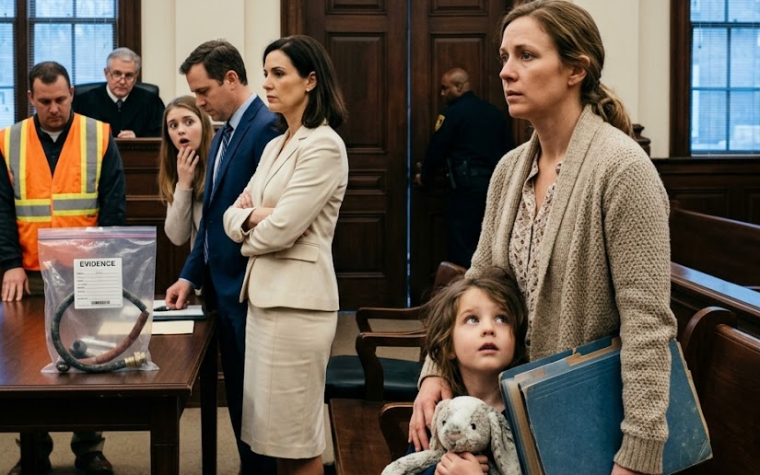
The preliminary hearing drew reporters because of the Garcia name, but the courtroom itself was smaller and plainer than the family’s lawyers seemed to expect.