One visit with friends that required no explanation.
She attended counseling.
She learned that missing the man Marcus pretended to be did not mean she wanted the real man back.
She learned that shame belonged to the person who caused the bruises, not the person who survived them.
I learned something too.
I had spent years believing restraint meant waiting until I had perfect evidence.
Cora’s flinch taught me that safety could not wait for perfection.
The paperwork mattered.
The money mattered.
The cameras, clauses, and recordings mattered.
But the first thing that saved her was being believed before the proof was complete.
A year later, Cora returned to the building that had once carried Marcus’s name.
The new owners had turned the private obstetrics wing into a family-safety center with independent advocates, confidential reporting rooms, and physicians who did not answer to one powerful executive.
The examination room had been repainted.
The old lock was gone.
Cora stood there holding her son on her hip.
He was healthy, curious, and determined to grab every stethoscope within reach.
She touched the doorway where Marcus had once ordered her to stop talking.
Then she looked at me.
“I thought you destroyed everything that morning,” she said.
“I destroyed what he used to control you.”
She glanced around the clinic—the nurses moving between rooms, the patients being treated, the staff members whose jobs had survived the sale.
“No,” she said quietly.
“You gave it back to the people it was supposed to serve.”
Her son reached for her necklace.
She kissed his hand and walked into the hallway without looking over her shoulder.
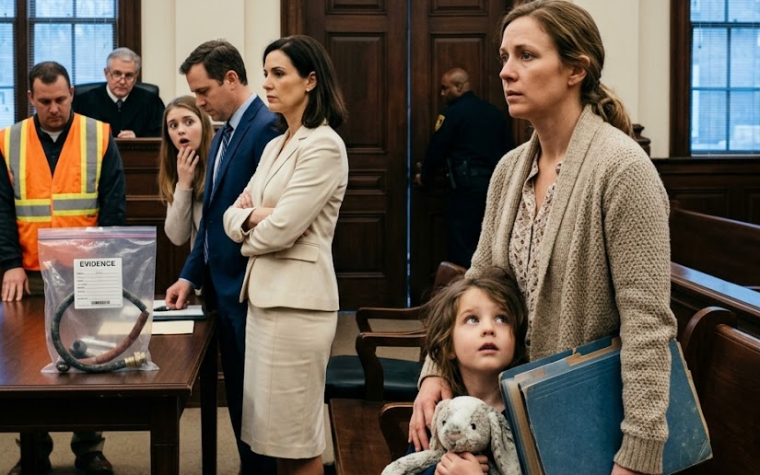
The last time I saw Marcus’s name, it was printed on a court document beneath the word defendant.
The last time I saw Cora’s, it was on the lease for a small house with sunlight in the kitchen, a fenced yard, and no rooms she was afraid to enter.
She signed it herself.