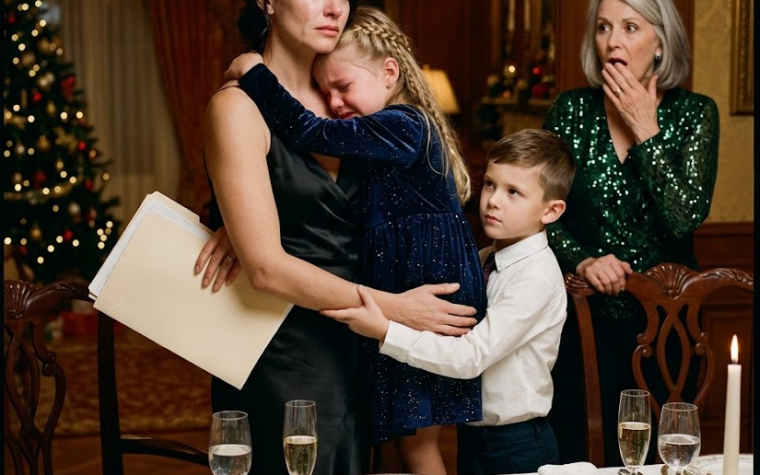
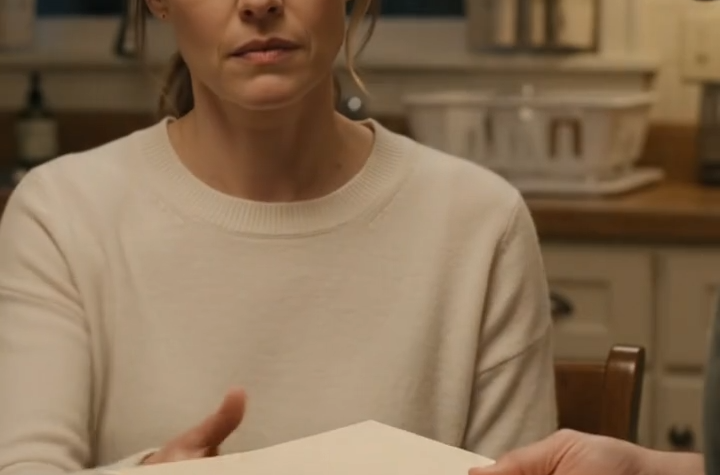
I turned to Lilah.
“Keep the recordings preserved.
Keep the discretionary freeze in place.
Begin the governance review.
I want ordinary business operations protected.
No employee misses a paycheck because of this family.”
She nodded.
“And personally?”
I looked at Colton.
Two days earlier, I had promised to build a life with him.
That morning, he’d shown me the life he intended to build for me instead.
“I won’t stay here with him.”
Colton stepped forward.
“Don’t do this.”
I held up one hand.
He stopped.
That was the first boundary he respected all morning, and only because the room had finally taught him there were consequences for crossing it.
“Do not touch me again.”
He lowered his hands.
Lilah moved to my side.
I took my phone from the counter and left the ring in the folder.
Behind me, Cynthia started crying again.
Reagan was using paper towels to wipe up the coffee herself.
Colton’s father sat heavily at the table, the unsigned authority of his surname suddenly smaller than the paperwork in front of him.
I reached the foyer before Colton called my name.
I stopped but didn’t turn around.
“Did you ever love me?” he asked.
The question almost hurt more than the slap because I had once believed the answer mattered.
“Yes,” I said.
“That’s why I married you before I knew who you became when nobody was watching.”
Then I looked back at the camera above the pantry.
“Fortunately, somebody was watching.”
I walked out through the same front doors we had entered as newlyweds two nights earlier.
The white wedding tent was still visible across the lawn.
A few decorations moved in the breeze.
Beyond them, the lake was flat and bright, indifferent to every promise made beside it.
The governance review that followed did not close Tate Hospitality.
The restaurants stayed open.
Staff kept their jobs.
Vendors were paid.
What changed was the family’s ability to treat company resources like a private inheritance without oversight.
Colton lost his discretionary authority while the incident and related conduct were reviewed.
His father no longer had unchecked control over protected funds.
Reagan’s company-funded spending stopped.
Cynthia learned that a beautiful house and a familiar surname were not the same thing as ownership.
And the preserved kitchen footage remained exactly where Lilah promised it would remain: safe, complete, and impossible to rewrite.
I pursued the end of my marriage through counsel rather than through another argument in that kitchen.
Whatever Colton said afterward, there was a recording of what happened before he knew who controlled Keystone Horizon.
That distinction mattered to me.
His apology came after the bank alerts.
His fear came after the folder.
His restraint came after he understood that I had leverage.
The slap had come when he thought I didn’t.
Weeks later, Lilah returned my wedding ring in a small envelope with the rest of my personal documents.
I held it for a long time.
It was strange how ordinary it looked.