Not the plastic itself.
The expectation.
Henry sat down across from me.
“Okay,” he said.
“Maybe I underestimated how much you were spending.”
Nancy turned sharply toward him.
“Underestimated? Henry, don’t let her make you feel guilty for earning your own money.”
I looked at her.
“Nobody is criticizing him for earning money.”
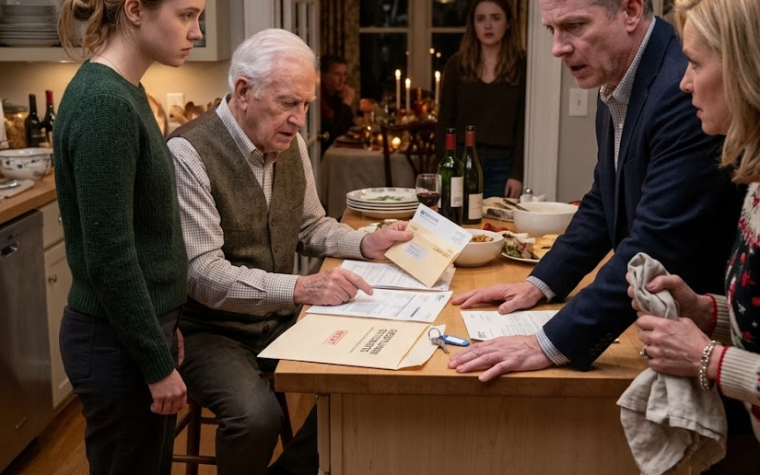
I slid the next page across the table.
“I’m showing where it went.”
Henry didn’t touch the sheet.
I continued.
“Last week you bought a new console.”
“With my money.”
“Exactly.”
“So what’s your point?”
“My point is that the same day you bought it, I paid the electric bill, restocked the pantry, and bought your nephew’s backpack because your mother said he needed one.”
Nancy lifted her chin.
“He did need one.”
“Then his parents could have bought it.”
Ryan flushed.
“I could’ve bought my son’s backpack.”
“I know.”
That seemed to bother him more than if I had accused him of being unable to afford it.
Julie looked at Nancy.
“You told us Chloe wanted to get it for him.”
I turned toward her.
“I was told he was embarrassed to use his old one.
I bought it because I didn’t want a child feeling ashamed over a backpack.”
Julie stared at Nancy.
Nancy’s expression hardened.
“Oh, for heaven’s sake.
Now we’re making a federal case out of a backpack?”
“No,” I said.
“We’re making a budget out of a pattern.”
Henry rubbed a hand over his face.
“Can we just order something and discuss this later?”
I leaned back.
“Of course.
Order whatever you want.”
He looked at me.
“For everybody.”
“That’s your choice.”
For the first time that afternoon, the new rule became real to him in a way labels on milk had not managed to accomplish.
If he wanted to feed seven people, he could.
He just had to be the person paying for it.
Henry pulled out his phone.
Nancy immediately began suggesting food.
“Get enough for leftovers,” she said.
“And something the children will eat.
Maybe the family platter.”
Then she added, without irony, “Don’t get that cheap place.
Their meat is dry.”
I watched Henry’s jaw tighten.
He had heard those complaints for years while I was paying, shopping, cooking, and cleaning.