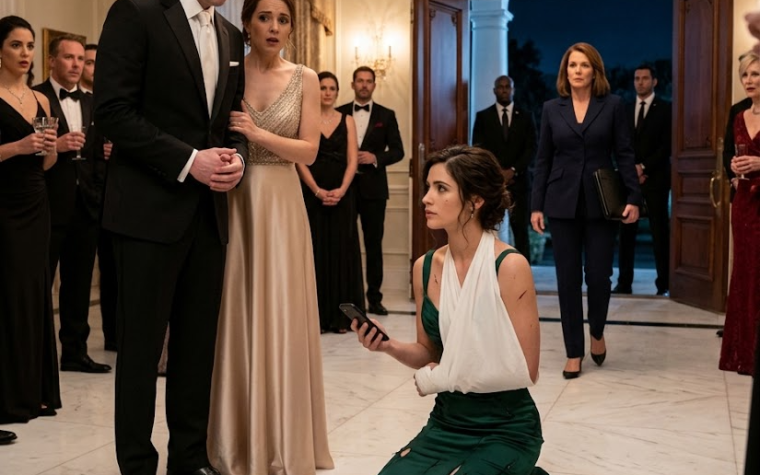
The kiss had gone viral, but that was no longer Conrad’s largest problem.
Within the hour, Whitmore Capital issued a notice correcting references to the foundation and suspending use of the donor-related commitments attached to the pending transaction.
Conrad argued that the correction was unnecessary.
His own counsel disagreed.
The board refused to risk allowing an inaccurate representation to remain outstanding after the contract had clearly terminated his access.
Several counterparties requested clarification.
One postponed its participation.
Another invoked its right to review the changed conditions.
The financing package Conrad had spent months presenting as inevitable began to unravel—not because Evelyn called anyone and demanded revenge, but because the contract required the truth to be told once his privileges disappeared.
That distinction mattered to her.
She did not want his company destroyed for adultery.
She did not want employees punished because their billionaire chairman wanted to humiliate his wife.
She wanted Conrad to lose only what he had no right to keep using: her foundation, her donor relationships, her reputation, and her silence.
The following morning, the Whitmore Capital board held an emergency meeting.
Conrad arrived furious.
By then every director had seen the red-carpet footage.
More importantly, every director had read the contract.
His defense lasted twenty-three minutes.
He said Evelyn had manipulated the event.
The general counsel reminded him that his own lawyers had reviewed the agreement.
He said the conduct clause was subjective.
A director asked whether looking into a live camera immediately after kissing his mistress at his wife’s foundation gala might reasonably demonstrate intent.
Conrad had no useful answer.
He argued that the financing would recover if the foundation restored its permissions.
Then someone asked the question he had avoided all night.
“Why would Evelyn do that?”
Silence.
Conrad looked around the boardroom and realized nobody there expected his wife to rescue him anymore.
The board removed him from direct control of the pending transaction while counsel assessed the damage.
His title did not disappear that morning, but the authority attached to it shrank sharply.
Over the next several weeks, the consequences became less theatrical and more serious.
The transaction was restructured without the foundation-related assumptions.
It survived in smaller form, but Conrad’s personal influence over it did not.
Two directors demanded tighter review of representations he personally certified.
Partners who once accepted his confidence as proof began asking for documents.
Invitations stopped arriving automatically.
The business press moved on from the kiss and began examining the governance failure behind it.
For Conrad, that was worse.
Public embarrassment fades.
Loss of unquestioned credibility compounds.
Evelyn filed for divorce quietly.
There was no second red-carpet confrontation and no interview in which she described herself as victorious.
She refused three television offers.
When one journalist asked why, she said, “The foundation was never supposed to become a monument to my marriage.”
Months later, she stood again inside the Harrington Arts Museum.
This time there were fewer cameras.
The Evelyn Hale Foundation had funded legal assistance, emergency housing partnerships, and professional support for women whose financial lives had been controlled by powerful spouses or employers.
Evelyn walked through the reception carrying the same white leather document case.
A young reporter recognized it.
“Is that the folder?” she asked.
Evelyn glanced down.
“Yes.”
“Do you keep the contract with you?”
“Not anymore.”
She opened the case.
Inside were grant applications, meeting notes, and letters from women the foundation had helped.