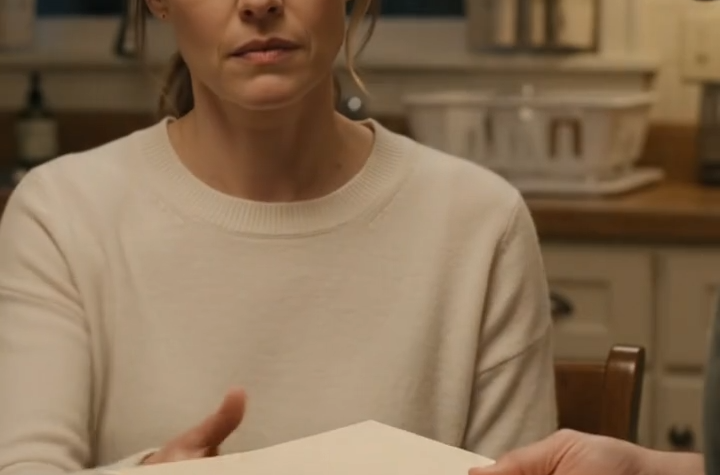
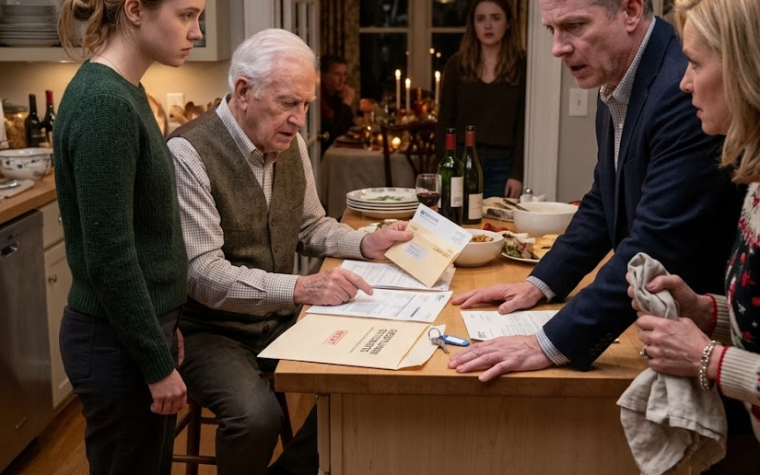
The silence lasted long enough to become an answer.
Finally, he said, “I thought you would understand.”
“Understand what?”
“That you’re strong.
You always manage.
Vanessa needed me more.”
I felt something inside me settle.
For years, Daniel had treated my competence as permission to neglect me.
Every crisis I survived made him more certain that he never needed to stand beside me.
He had mistaken resilience for invulnerability.
And he had taught our son the same cruel lesson—that the person who screams loudest deserves help before the person quietly fighting to breathe.
“I did manage,” I said.
“But I will never again confuse surviving without you with being loved by you.”
I placed the separation papers on the table.
Daniel stared at them.
“You’re ending our marriage over one decision?”
“No.
I’m ending it because that decision revealed every other one.”
He refused to sign at first.
Then his attorney reviewed the footage, the witness statements, and the medical report documenting Mason’s condition.
The evidence mattered during the custody proceedings.
Daniel was not denied contact with Mason forever, but the court required supervised visits until he completed parenting education and demonstrated that he could follow medical instructions.
He was also ordered not to interfere with emergency or treatment decisions.
Mason recovered slowly.
For several nights, he woke crying whenever he heard heavy machinery or a helicopter overhead.
I sat beside him, held his hand, and reminded him that the helicopter had come for us.
Months later, when I was walking with a cane, Dad took Mason and me to the Northstar hangar.
The same black-and-silver aircraft stood beneath the lights.
Mason touched the painted crest near the door.
“Is this ours?” he asked.
“It belongs to everyone who needs it,” my father told him.
Mason considered that answer seriously.
Then he looked at me.
“Even people we don’t know?”
“Especially them,” I said.
That had always been my family’s real secret.
It was never the aircraft, the company, or the money Daniel suddenly cared about.
It was the belief beneath all of it: when someone is trapped, frightened, or unable to save themselves, you do not decide their life matters less because another person is louder, richer, prettier, or more convenient.
You help the person in greatest danger.
Daniel had spent years trying to impress powerful people without recognizing what true power looked like.
It looked like a paramedic refusing to forget a sick child.
It looked like witnesses finally speaking.
It looked like a father crossing a disaster zone for his daughter and grandson.
And sometimes, it looked like a woman lying beneath a steel beam, holding her son alive long enough for help to reach them.
The earthquake damaged my leg, ended my marriage, and exposed a truth I had avoided for years.
But it did not shatter my family.
It revealed who my family really was.