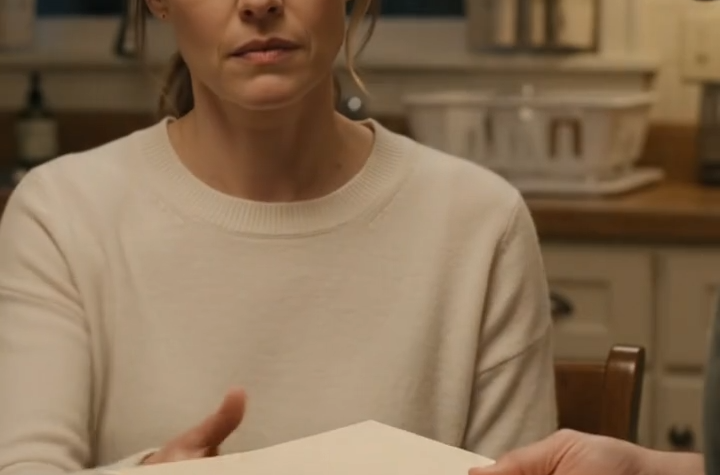
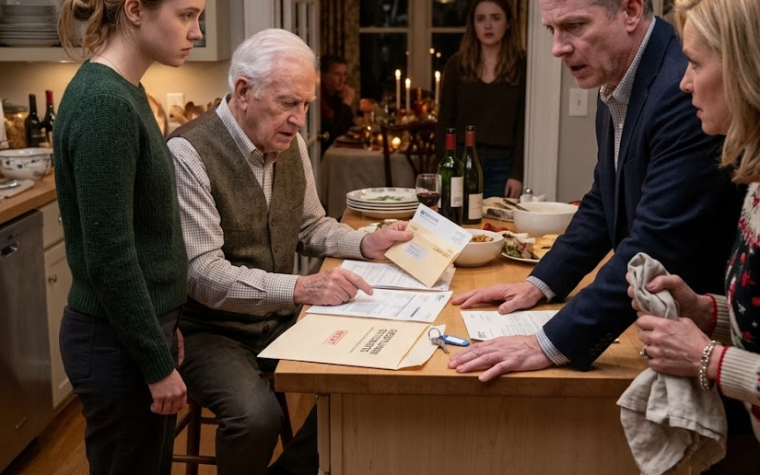
“I made a judgment call.”
“You carried a woman with a sprained ankle past your son.”
“Vanessa was terrified.”
“So was Mason.”
Daniel’s voice hardened.
“You’re twisting this because you’ve always been jealous of her.”
I almost laughed.
Even then, with evidence recorded and witnesses speaking, he needed the problem to be my emotion rather than his choice.
“I’m not twisting anything,” I said.
“Your words are on camera.”
“You can ask your father to keep the footage private.”
“No.”
The answer came easily.
Daniel paused.
He was not accustomed to hearing that word from me without negotiation.
“Think carefully,” he said.
“This could destroy my career.”
“I was under a steel beam with our son in my arms.
You thought carefully enough to tell rescuers we were fine.”
I ended the call.
The next morning, Northstar’s ethics committee convened an emergency review—not because I ordered one, but because Daniel’s company was an active bidder for a medical construction contract.
His conduct during a disaster raised questions about judgment, honesty, and interference with emergency procedures.
I recused myself from the decision.
Daniel later claimed that proved I was punishing him indirectly.
In reality, the board needed no help from me.
They reviewed the paramedic’s recording.
On it, Daniel could be heard refusing the recommendation to evacuate Mason, insisting that Vanessa go first, describing us as stable without examining either of us, and using his position as Mason’s father to influence the rescue team.
The committee removed his company from consideration.
When Daniel’s executives learned why they had lost the largest contract in their division’s history, they opened their own investigation.
Several employees came forward with complaints about Daniel’s favoritism toward Vanessa.
She had received travel privileges, bonuses, and access to confidential projects despite lacking the qualifications required for her role.
There was no dramatic confession of an affair, and I did not need one.
The betrayal I had witnessed was already complete.
Daniel had shown me, in the clearest possible way, whose fear mattered to him and whose suffering he believed he could dismiss.
Vanessa tried to protect herself by claiming Daniel had forced her into the ambulance.
The body-camera footage contradicted her.
It captured her clinging to him, urging him to hurry, and telling me she knew he would choose her.
Within two weeks, Daniel was placed on administrative leave.
Vanessa was dismissed for policy violations related to confidential files and false expense reports discovered during the review.
Daniel blamed me for both outcomes.
He came to the hospital once more after Mason had been moved out of intensive care.
This time, I agreed to see him in a consultation room with a hospital social worker present.
He looked smaller than I remembered.
His suit was wrinkled, and the confidence that once filled every room had vanished.
“I made a mistake,” he said.
I waited.
“I should have checked Mason before leaving.”
“You saw him.”
“I was under pressure.”
“So was everyone else.”
“Vanessa was panicking.”
“Mason was seven.”
Daniel rubbed his face.
“What do you want me to say?”
“The truth.”
He looked away.