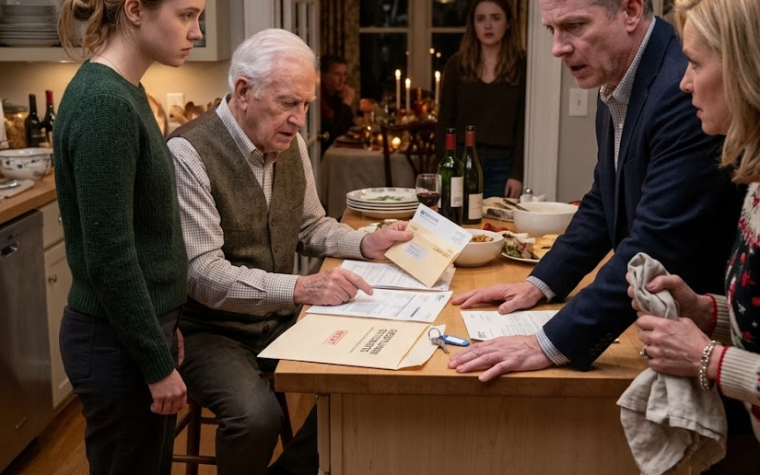
Then he tore the paper in half.
“You think hiring Alice’s old lawyer makes you powerful?”
“It makes everything documented.”
Mom picked up one torn piece.
“After everything we’ve sacrificed for you?”
I almost answered the way I always had.
I almost listed the groceries, insurance payments, repairs, vacations, and two years without rent.
Instead, I said, “Your attorney has a copy.”
Dad stepped toward me.
I did not step back.
His gaze dropped to the phone in my hand.
He stopped before touching me.
“We’ll bury you in court,” he said.
“Then I’ll see you there.”
That night, I moved Aunt Alice’s estate papers, my passport, work equipment, and personal records to a secure location.
I photographed every room.
I made an inventory of the furniture I owned and the belongings my parents had brought with them.
I changed the passwords to my banking, utilities, and insurance accounts, but I left the house codes active while the legal process continued.
Roman had been clear: restraint mattered.
My father expected an emotional mistake.
I gave him paperwork.
My mother expected guilt.
I gave her silence.
The following afternoon, Dad hosted friends beside the unfinished putting green.
The same men who had walked into my client meeting drank on my patio while he described me as “confused” and “overwhelmed.”
I heard one of them ask whether the house was actually his.
Dad answered, “It will be.”
I saved that recording from the exterior security camera too.
The hearing was scheduled for the week of their Italy trip.
Their attorney requested a delay.
Roman opposed it and submitted the travel itinerary showing that the trip had been booked long before the notice was served.
My parents were not hospitalized, displaced, or unable to participate.
They were choosing an international vacation over a hearing concerning a house they claimed was medically essential.
The request for a long postponement was denied.
They were allowed to appear remotely.
Dad treated that as proof he had already won.
On the morning they left, he wore a new linen jacket.
Mom carried a white leather travel bag I had given her for Christmas.
At the airport curb, Dad handed me his key as if assigning a servant a task.
“Keep an eye on my putting green.”
Mom kissed the air beside my cheek.
“Try not to be dramatic while we’re gone.”
I watched them roll their suitcases toward the terminal.
I had paid for the flights, the hotels, and the car waiting for them in Rome.
Months earlier, I had imagined the gift as a way to thank them for being my parents.
Now it gave me twelve days in which they could not crowd my doorway, enter my office, or turn every conversation into a siege.
I drove directly to Roman’s office and signed the remaining filings.
Two days later, the woman who had asked whether I was safe during the Zoom meeting gave Roman a written statement.
She described my father entering without permission, belittling my work, refusing to leave, and shoving me into the desk.
The other executives had seen it too.
The company had terminated the contract because the meeting collapsed, but the incident itself was no longer my word against his.
The landscaping company produced its invoice.
Dad had signed the authorization line and represented himself as the person controlling the property.
He had not paid with his own money.
He had instructed the company to bill the address and told them I had approved the work.
One of the workers had photographed the garden before demolition for the company file.