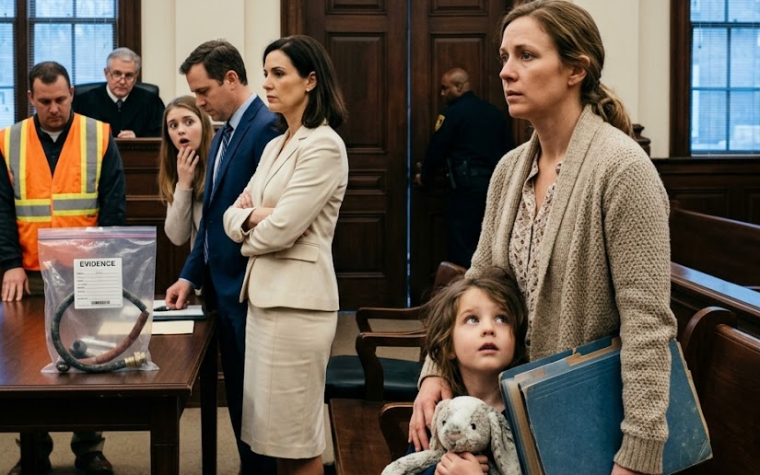
Roman placed one hand on the folder before I could sign.
“Yes,” he repeated.
“You can sell the house.
But selling it does not magically erase anyone’s legal rights.
We document everything, terminate their permission properly, obtain possession, disclose what must be disclosed, and close only when the title can be delivered cleanly.”
I stared at the first page.
“How long?”
“That depends on how badly they misjudged you.”
He asked whether I wanted revenge or freedom.
“Freedom,” I said.
The answer came faster than I expected.
Roman opened a yellow legal pad and began building a timeline.
The day my parents moved in.
Every promise that the arrangement would be temporary.
Every request for rent they had refused.
Every utility bill I had paid.
The bulldozer.
The destroyed roses.
The office invasion.
The shove.
The lost contract.
The accidental call.
When I told him I had recorded the final four minutes, his pen stopped.
“Back it up again,” he said.
“I already saved it in three places.”
For the first time that week, he smiled.
“That sounds like Alice.”
Aunt Alice never raised her voice when facts would do more damage.
Roman listened to the recording through once without speaking.
Dad’s laughter filled the office.
Mom discussed the best moment to pressure me into changing the deed.
Dad described my office as his future cigar room.
Then came the sentence that had finally severed something inside me.
“She’s stupid enough to let us stay.”
Roman removed his glasses.
“They are not discussing housing security,” he said.
“They are describing a plan to exploit you.”
The first document in the folder was not a sales contract.
It was formal notice revoking their permission to occupy my home.
I signed it.
The second authorized Roman to communicate with their attorney.
I signed that too.
The third began the court process for possession if they refused to leave by the stated deadline.
My hand trembled once.
Then it stopped.
Roman did not promise an instant victory.
He warned me that my father might shout, threaten, delay, or claim I was unstable.
My mother might cry in front of anyone willing to listen.
Their lawyer might seek extensions.
The sale could not close until every legal step was complete.
“But their Italy trip gives us a useful window,” he said.
“Not because we are going to lock them out illegally.
Because they have already chosen to be unavailable during a dispute they know exists.”
They had eight days before departure.
The notice was served the next morning.
Dad read the first paragraph in the kitchen while I stood near the doorway with my phone recording openly.