He had created it because they repeatedly pressured him to sign the property back while he was ill.
During one hospital visit, Patrick brought documents and told Andrew that a dying man should not leave important assets in “untrained hands.”
Andrew refused.
The next morning, he called Rebecca.
He transferred the house into the trust, funded the expense account, and wrote instructions protecting the children’s right to remain there until Sophie reached adulthood.
As trustee, I could live in the home, sell it if necessary for the children’s welfare, or maintain it as long as the trust remained solvent.
Patrick could not remove us.
Margaret could not claim the property through probate.
No relative could force a sale for personal benefit.
At the bottom of the letter, Andrew had written one final sentence.
You were never the outsider in our family, Cynthia.
You were the reason it became a family.
I pressed the paper against my mouth and cried for the first time since the funeral.
Not because Patrick had thrown us out.
Not because Margaret had insulted me.
I cried because Andrew had understood the danger, prepared for it, and still found a way to speak when he was gone.
The legal fight that followed lasted several months.
Patrick challenged the trust, claiming Andrew lacked capacity.
Medical records, witness statements, and the attorney’s notes proved otherwise.
The court confirmed that Andrew had understood the documents and signed them voluntarily.
Patrick also argued that the original transfer to Andrew had been conditional.
His own warranty deed defeated that claim.
The gate recording defeated nearly everything else.
It captured Patrick ordering us out, Margaret admitting they changed the locks, Benjamin’s protest, the slap, and Patrick declaring the house his.
It also showed me repeatedly asking only for shelter for the children.
The footage spread through the Callahan family without my help.
The relatives who had watched from the windows could no longer pretend they had misunderstood what happened.
Some apologized.
Others stayed silent because an apology would have required admitting they chose comfort over courage.
I stopped needing either response.
The court issued a protective order preventing Patrick from approaching Benjamin or entering the property without permission.
The assault case ended with mandated counseling, community service, and strict conditions requiring Patrick to avoid contact with us.
Margaret sent three letters blaming grief, stress, and my supposed hostility.
She never mentioned throwing the children’s clothes into the rain.
I returned every letter unopened.
Inside the house, the first weeks were difficult.
Every room carried Andrew’s absence.
His shoes remained beside the bed.
His coffee mug was still in the cabinet.
The twins sometimes woke at night and asked whether Grandpa could take the house while they slept.
I showed them the new locks.
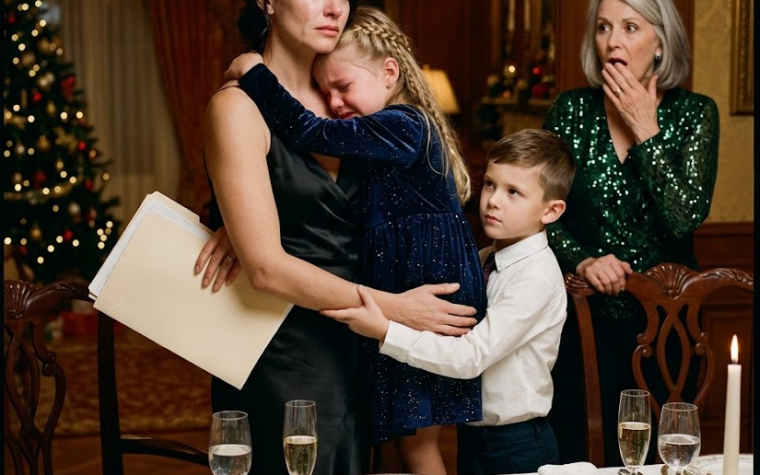
Then I showed them the yellow folder.
“This house belongs to the trust your father made for you,” I explained.
“No one can throw you out just because they are angry.”
Benjamin took longer to heal.
The bruise faded before the humiliation did.
He blamed himself for stepping forward at the gate.
I told him the truth.
“You did what you thought your father would have done.
But protecting this family does not mean letting someone hurt you.
Your father protected us with preparation.
That is strength too.”
Months later, I renewed my nursing certification and began working part-time at the same hospital where Andrew had received treatment.
The trust covered the house expenses while I rebuilt our income.
We lived carefully, but we lived without begging Patrick or Margaret for anything.
On the first anniversary of Andrew’s death, the children and I gathered in the living room.