“Is your little girl okay?”
When I told him she was stable, he said, “Stay home today.
We’ll cover you.”
I had spent so much of my life expecting punishment for needing help that ordinary kindness felt almost suspicious.
Brad came by that afternoon carrying groceries and the medication my parents had failed to collect.
He did not make excuses for them.
He did not tell me family was family.
He set the pharmacy bag on the counter and looked ashamed.
“I believed a lot of what they said about you,” he admitted.
“I know.”
“I should have asked.”
“Yes.”
He nodded, accepting the answer without demanding that I make him feel better.
Then he crouched beside Laya and gave her a small plastic dinosaur he had bought at the pharmacy.
She introduced the dinosaur to Copper and decided they were now a medical team.
Before Brad left, he told me the rest of the family had confronted my parents after the call.
Marlene had insisted I had manipulated the situation.
Doug had claimed the clinic visit proved I enjoyed creating emergencies.
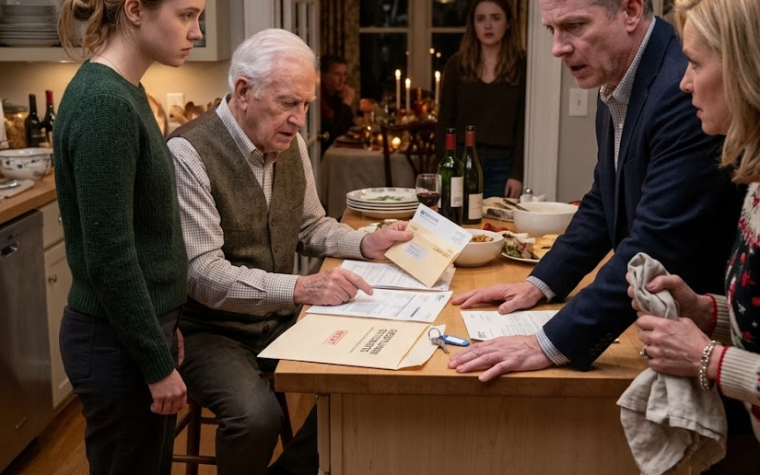
But their explanations kept collapsing beneath one fact: they had read the warning and consciously decided dinner mattered more.
Aunt Denise refused to let them stay at her house unless they apologized to me first.
They chose the motel.
For the next week, messages arrived from relatives.
Some apologized.
Some tried to soften what my parents had done.
A few advised me not to “destroy the family over one mistake.”
I answered those people with the same sentence.
“It was not a mistake.
It was a decision made after reading a medical warning.”
Most stopped arguing after that.
My parents did not apologize.
They sent accusations instead.
My mother said I had embarrassed them publicly.
My father said I was teaching Laya to disrespect her elders.
They both claimed Janet would have wanted reconciliation.
That message nearly made me call them.
Not because I believed it.
Because using my wife’s name was the cruelest lever they had left.
I sat on the edge of my bed with the phone in my hand, remembering Janet’s voice in the hospital.
She had not asked me to preserve every family relationship.
She had asked me to protect our daughter’s certainty that she mattered.
I blocked their numbers.
Then I changed the locks.
Weeks passed.
The house settled into its old rhythm.
Quiet breakfasts.
School drop-offs.
Work shirts smelling faintly of oil.
Medication checks before bed.
Copper standing guard beside Laya’s pillow.
There were hard moments.
Childcare cost more than I could comfortably afford.
I had to ask Brad for help twice and Aunt Denise once.
Each request made my stomach tighten, but no one used the help to control me.
No one called me incapable.
No one demanded praise.
Laya’s breathing remained stable.