The estate attorney reached into his briefcase and removed another file.
“Since the subject has been raised, Harold Whitaker’s adoption of Evelyn was final, lawful, and never revoked.
Under Tennessee law and under the terms of his estate plan, she is his daughter.
There is no separate category of child based on your personal opinion.”
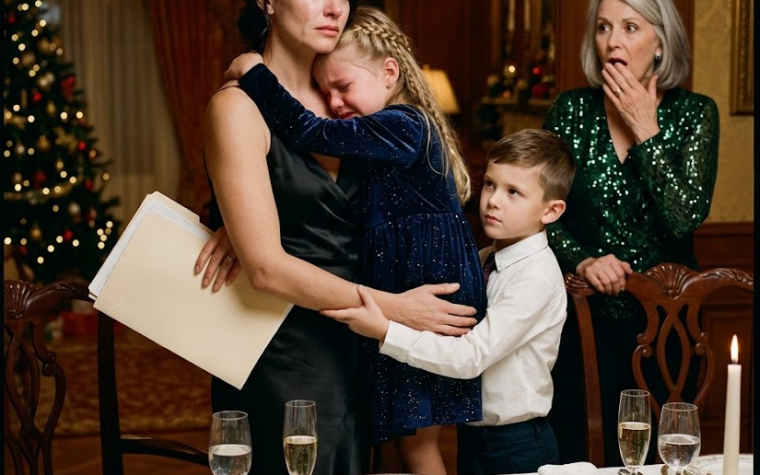
Aunt Rebecca began to cry quietly.
I did not feel triumphant.
I felt tired.
For years, Mason and Hunter had repeated the same accusation until part of me feared it had become true through repetition.
Yet there it was in a plain legal file: I had not imagined my place in Dad’s life.
I had not stolen his name.
He had chosen me, signed for me, raised me, and taught me how to measure wood twice before making a cut.
Mason sank back into his chair.
“What happens now?” Hunter asked.
Caroline answered carefully.
“The bank’s sale is complete.
Your LLC remains responsible for any obligations not satisfied through foreclosure, subject to the terms of the loan and personal guarantees.
The bank will communicate through counsel.”
Hunter’s face drained of color.
“Personal guarantees?”
Mason said nothing.
Hunter reached for the loan agreement and flipped through the pages.
“You told me the land was the only security.”
“I told you it was handled.”
“You signed my name to this section.”
“You signed it yourself.”
“I signed the application.
Not this guarantee.”
The attorney took the document from Hunter before the argument could become physical.
“This conversation should continue with independent counsel.”
Hunter stared at Mason with a hatred that had not been there the night before.
Their alliance had always depended on the belief that cruelty shared between them was loyalty.
Now the numbers on the page showed what it really was.
Mason had needed Hunter’s signature, his confidence, and his willingness to intimidate me.
Hunter had mistaken being useful for being loved.
I understood that mistake better than I wanted to.
Mason turned toward me again.
“What are you going to do? Throw us out?”
Everyone watched me.
The easy answer would have been yes.
After the garage, the leftovers, the dinner, and the years of being told I was temporary, I could have ordered them off the property before their coffee cooled.
Instead, I opened the final section of my folder.
“The preservation agreement requires the farmhouse, barn, original stone walls, and ridge trail to remain intact,” I said.
“No development.
No subdivision.
No demolition.”
Mason’s eyes narrowed.
“You gave strangers control of Dad’s land.”
“I partnered with people whose entire purpose is keeping land like this from becoming luxury lots.”
“You think that makes you noble?”
“No.
It makes the property safe.”
I slid two envelopes across the table, one to each brother.
“You have seventy-two hours to remove your personal belongings.
Nothing belonging to Dad or the estate leaves without the attorney’s approval.
No equipment, furniture, documents, artwork, tools, or fixtures are to be removed.”
Hunter opened his envelope.