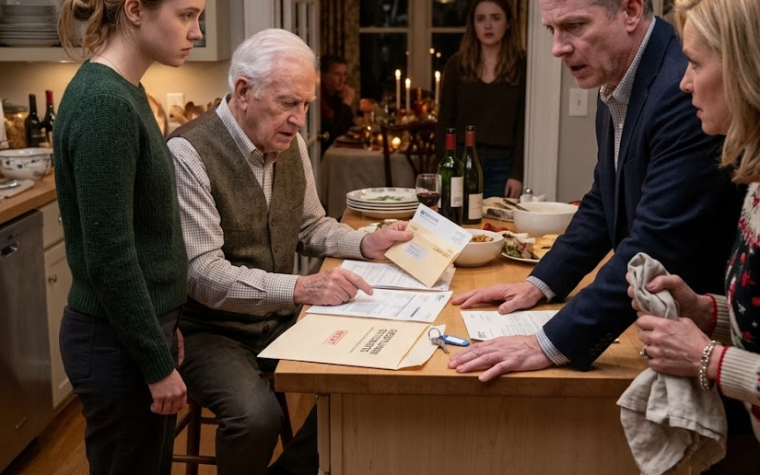
I sent one message to the family group chat.
From now on, I will not pay personal bills, party expenses, debts, repairs, or last-minute charges for anyone.
Dad’s medical schedule must be shared among all three siblings.
Do not volunteer my time or money without asking me.
Any future request needs to be made directly and honestly.
Zachary responded first.
This is an extreme reaction.
I replied with a photograph of the guest list.
The names were too blurred to expose anyone, but the empty space where mine should have been was unmistakable to those who had seen it.
No one answered after that.
The new arrangement was uncomfortable because fairness often feels cruel to people who benefited from imbalance.
Zachary began driving Dad to appointments twice a month.
Cheryl paid the remaining dinner charges in installments.
Mom canceled a planned kitchen renovation that she had expected me to help fund.
None of them suffered.
They simply encountered responsibilities that had once been redirected toward me.
Dad called near the end of my trip.
Unlike the others, he did not begin with a demand.
“I should have asked where you were,” he said.
I waited.
“I saw the seating chart before the dinner,” he continued.
“I noticed your name wasn’t there.”
The admission hurt more than another excuse would have.
“Why didn’t you say anything?”
He took a long breath.
“I told myself Cheryl had spoken to you.
I didn’t want conflict.”
“So you accepted my absence because questioning it would have been uncomfortable.”
“Yes.”
It was the first honest answer anyone had given me.
“I’m sorry,” he said.
“You deserved better from me.”
I did not forgive him during that call.
An apology could acknowledge the wound, but it could not erase years of silence.
“I need time,” I said.
“I understand.”
For once, he did not ask me for anything else.
When I returned to Oregon, Fay met me at the airport.
She held no dramatic sign and made no speech.
She simply took one of my bags and said, “You look rested.”
“I feel different.”
“You are different.”
The family requested a meeting two weeks later.
I agreed only if Fay attended and only if the conversation was not held at my parents’ house, where every room carried old habits.
We met in a quiet café.
Mom apologized for allowing Cheryl to control the invitations and for choosing comfort over my dignity.
Dad repeated his apology without defending himself.
Zachary admitted he had accepted my financial help while dismissing my feelings because it was convenient.
Cheryl struggled the most.
She said she had wanted the evening to feel polished.
She said my photography friends, my clothes, and my habit of avoiding church gossip made me seem disconnected from their world.
I listened until she finished.
“You didn’t exclude me because I was disconnected,” I said.
“You excluded me because you believed I would keep paying even after you rejected me.”
Her eyes filled with tears.
“I didn’t think you would find out.”